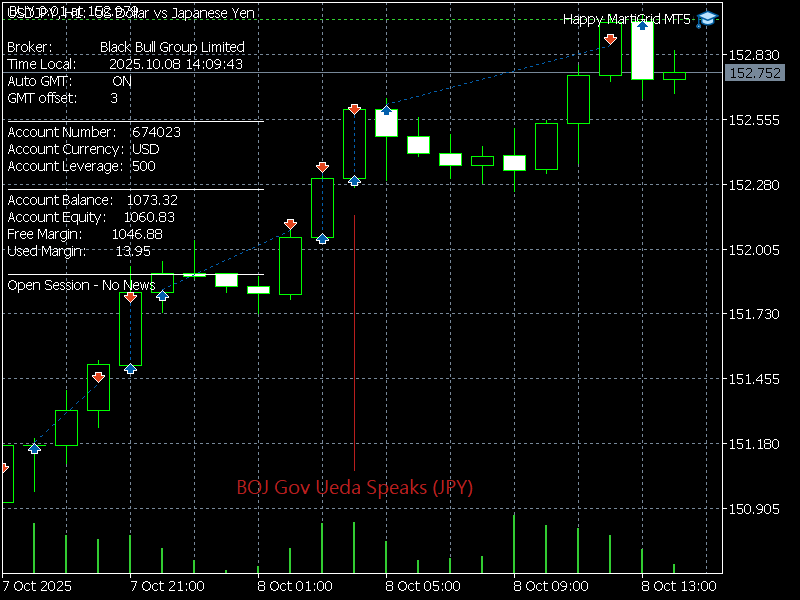
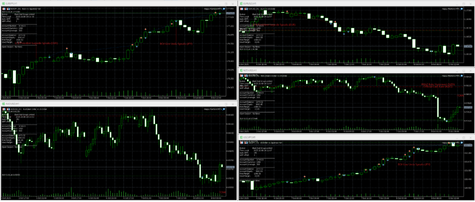
A fully automated forex trading system that captures market oscillations using adaptive grid entries, intelligent lot sizing, and built-in news filtering to navigate ranging and volatile conditions.

Happy MartiGrid EA is designed for traders who want to capitalize on price noise and reversals without sitting in front of the charts all day. Combining grid-based entry logic with martingale lot progression, this EA opens a series of small positions at dynamic intervals and closes them together when the basket reaches your target. It adapts to market conditions using technical filters and blocks trades around high-impact news events, giving you a hands-off approach to consistent, small-gain trading on H1 timeframes. Whether you're running a single pair or multiple symbols, Happy MartiGrid handles the execution, risk calculations, and trade management automatically.

Every feature is built to give you control, transparency, and automation. From adaptive grid spacing to real-time news filtering, Happy MartiGrid EA adapts to your account size, risk tolerance, and market conditions.
Happy MartiGrid EA is optimized for the H1 timeframe across pairs that exhibit regular oscillation patterns in the forex market. The primary configurations focus on GBP/USD and AUD/USD for single-pair setups, while the multipair portfolio adds EUR/USD, EUR/JPY, NZD/USD, and USD/JPY. Some traders have also tested it on gold, though the recommended pairs remain the core focus. Each pair's adaptive grid spacing is tuned for its typical volatility range.
Results from multi-year backtesting show that the martingale trading strategy produces stable profits during ranging and mean-reverting conditions. Performance tends to weaken during sustained directional trends where price fails to retrace. The algo trading logic behind Happy MartiGrid accounts for this by adjusting grid spacing and entry filters based on historical volatility. Real account results and demo testing should always be compared against backtest data to confirm consistency under live execution conditions.
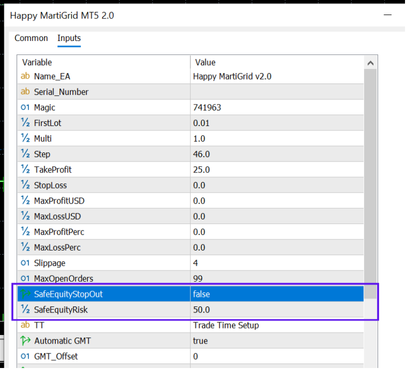
Despite using martingale lot progression, Happy MartiGrid EA includes several controls designed to keep risk within defined boundaries. You can set maximum open orders per cycle, equity stop-out levels, and martingale lot multiplier limits. Low drawdown targets are achievable on conservative settings, though the tradeoff is reduced profit potential. These parameters give you direct control over worst-case exposure, which is essential for any automated forex trading system that uses grid logic.
Once configured and attached to the correct charts, the EA Happy Forex system runs entirely on its own. Entries, grid expansion, basket closures, and news filtering all operate without manual input. This makes it suitable for traders who want a fully automated approach to the forex market without monitoring charts throughout the session. Periodic review of account equity and open exposure is still advisable, but day-to-day involvement is not required.
The core trading strategy combines grid entries at calculated intervals with martingale lot sizing on subsequent levels. What separates Happy MartiGrid from simpler grid systems is the inclusion of technical filters that assess market conditions before opening new positions. The EA does not blindly add to losing trades; it waits for confirming signals before expanding the grid. This filtered approach reduces the frequency of deep grid cycles, though it does not eliminate them entirely during extreme directional moves.
Happy MartiGrid EA includes a built-in news filter that pauses new grid entries during scheduled high-impact economic releases. Existing positions remain open and are managed normally; only new entries are blocked during the defined window. The filter draws from an internal event calendar covering USD, EUR, GBP, and other major currency releases. This feature helps avoid opening new exposure during periods when spreads widen and price action becomes unpredictable.


This EA is built for traders who understand grid and martingale mechanics and want a systematic, rule-based approach to capturing reversals and market noise.

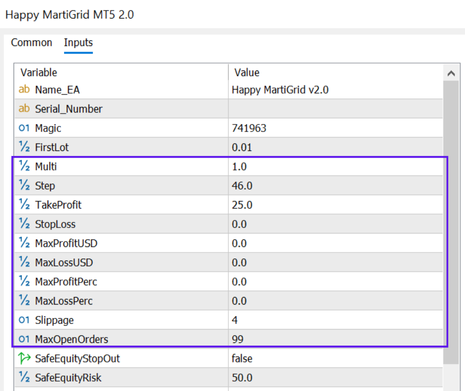
Happy MartiGrid EA adjusts grid step size dynamically based on market volatility. In ranging conditions, it tightens spacing to capture smaller moves; in trending markets, it widens steps to avoid overtrading and excessive exposure.

Each new position in the grid increases lot size using a multiplier (default 1.3 for single pairs, 1.0 for multipairs). This allows smaller price reversals to recover earlier floating losses and close the entire basket in profit when the market retraces.

All grid trades close together once the combined floating profit hits your target (measured in pips, USD, or percentage). This ensures you lock in gains from the whole series of trades, not individual positions.
Happy MartiGrid EA is built for a specific type of forex trader. It uses martingale lot progression within a grid framework, and that combination is not for everyone. Understanding whether it fits your risk profile before deploying real capital is important. Here is who typically benefits most:
This is the most important qualifier. If you are fundamentally opposed to lot scaling on losing positions, this EA is not the right choice. But for those who understand how managed martingale works, with defined multipliers and maximum order limits, the system provides a structured approach that many find effective during oscillating conditions.
Grid cycles can take days or weeks to complete, and the account needs sufficient margin to support multiple open positions at increasing lot sizes. The minimum recommended balance of $3,000 applies to conservative single-pair settings. Multipair portfolios or more aggressive configurations require proportionally more capital.
Once configured, Happy MartiGrid runs independently on the MetaTrader platform. There is no need for daily chart analysis or manual trade decisions. The system handles entries, grid expansion, basket closures, and news filtering without intervention. For traders who want automation without constant oversight, this fits that requirement well.
If your existing EA lineup leans toward trend-following or scalping strategies, adding a grid-based system introduces a different return profile. Happy MartiGrid performs best during ranging markets, which is precisely when most trend-following systems underperform. The correlation between these approaches tends to be low, making it a reasonable diversification addition.
We genuinely recommend spending 2 to 3 months on a demo account before committing live funds. Watching how the grid expands, how basket closures work, and how equity swings feel in real time is valuable. The EA performs identically on demo and live once activated, so the testing experience translates directly.
Here are answers to the most common questions about Happy MartiGrid EA's trading logic, risk profile, and setup requirements.
The minimum recommended balance is $3,000 for conservative single-pair settings using 0.01 starting lots, a 1.3 multiplier, and 10 to 15 maximum orders. Larger accounts are needed for multipair portfolios or more aggressive configurations. Adequate capitalization is essential because the grid may hold multiple open positions simultaneously, each at progressively larger lot sizes.
It can technically run on any pair, but performance is optimized for GBP/USD and AUD/USD in single-pair mode, or a five-pair portfolio including AUD/USD, EUR/USD, EUR/JPY, USD/JPY, and NZD/USD. The H1 timeframe works best with pairs that show regular oscillation patterns and consistent liquidity. Running on untested instruments is not recommended.
The EA does not close individual losing positions. Instead, it opens additional orders at wider grid intervals with larger lot sizes based on the martingale multiplier. When price retraces sufficiently, the entire basket closes in aggregate profit. Losses only occur if you manually close the grid before completion or if account equity reaches the stop-out level.
Absolutely. We recommend testing on demo for at least 2 to 3 months across several brokers to observe grid behavior, basket closure timing, and equity fluctuations. The EA performs identically on demo and live accounts once your serial key is activated. This testing period is valuable for understanding how the system responds to different market conditions.
The EA pauses new grid entries during the specified news window. Existing positions remain open and continue to be managed according to normal grid logic. Once the news buffer period ends, the system resumes entries based on its technical filters and current market conditions. The filter only prevents new exposure; it does not close or modify existing positions.
The maximum is fully configurable through the settings panel. Conservative presets typically allow 10 to 15 grid levels per cycle. More aggressive configurations can extend beyond 20 levels, though this requires significantly more capital to support the accumulated position sizes. Each additional level uses a larger lot based on the martingale multiplier, so the margin requirement grows progressively. Setting this parameter too high relative to your account balance is one of the most common mistakes new users make. We recommend starting with the conservative defaults and only increasing after observing several complete grid cycles on demo.
Happy MartiGrid EA typically operates a grid in one direction at a time per pair. The technical filters determine whether the initial entry is a buy or sell, and subsequent grid levels follow that same direction. The system does not open opposing grids on the same instrument simultaneously. This single-direction approach simplifies basket management and prevents conflicting exposure on the same pair. If conditions reverse significantly after a grid closes, the EA may open a new cycle in the opposite direction based on updated signal logic.
On conservative settings with a single pair, historical results and real account data show maximum drawdowns typically in the 15 to 25% range during normal market conditions. Extended trending periods without meaningful retracement can push this higher. The multipair portfolio may experience similar or slightly greater drawdown during correlated moves across several pairs. The configurable equity stop-out provides a hard limit beyond which all positions close automatically. Starting with low drawdown targets and a single pair is the safest introduction to the system's behavior.
Yes, both MetaTrader 4 and MetaTrader 5 versions are available. The core grid logic and technical filters operate identically across both platforms. Some traders prefer MT5 for its improved backtesting capabilities, while others remain on MT4 for broader broker compatibility. Performance differences between the two are minimal under live conditions. Choose the platform that matches your broker's offerings.
A VPS is strongly recommended. Grid cycles can remain open for days or weeks, and uninterrupted connectivity is essential for proper basket management. If the EA loses connection during an active grid, new entries may be missed and existing positions could go unmanaged, creating uncontrolled exposure. Most forex VPS services cost between $10 and $30 per month. Running on a home computer is technically possible but introduces reliability risks that most experienced grid traders prefer to avoid.
Yes. Happy MartiGrid EA ships with preset files covering conservative, moderate, and aggressive risk profiles. Each adjusts the starting lot, multiplier, maximum grid levels, and grid spacing to match different capital levels and risk tolerances. The conservative preset is recommended for new users and smaller accounts. Moderate and aggressive profiles target higher returns but require larger balances and tolerance for deeper drawdowns. Loading a preset takes seconds through the MT4 or MT5 input panel.
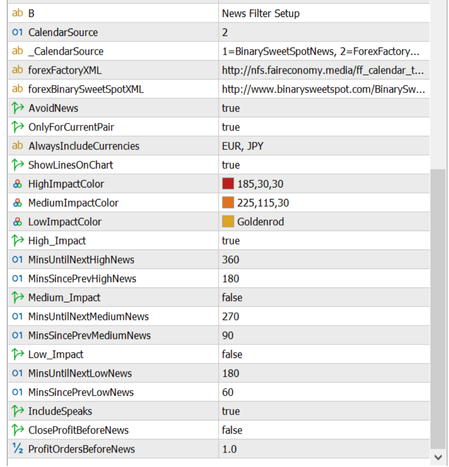
The news filter is configurable, allowing you to specify which event categories trigger the entry pause. You can choose to block all high-impact releases or restrict the filter to specific events such as NFP, central bank rate decisions, or employment data. This flexibility is useful for traders who want the EA active during most news periods but prefer caution around the most volatile announcements. The filter window duration before and after each event is also adjustable, giving you control over how conservatively the system responds to the economic calendar.
The news filter only prevents new grid entries during the defined event window. Existing positions remain open and are managed according to normal basket logic. The EA does not close or modify open trades based on news timing. This means that if a grid is already active when a news event occurs, those positions stay in place and will close when the basket reaches its profit target or equity stop-out. Some traders prefer this approach because forced closures during active grids could lock in unnecessary losses.
In most cases, no. The martingale lot multiplier and potential for extended grid cycles conflict with the strict drawdown limits and position sizing rules that most prop firms impose. Funded accounts typically cap daily drawdown at 4 to 5% and maximum drawdown at 8 to 12%, which a deep grid cycle can breach. Some firms may allow it with very conservative settings and a single pair, but this significantly reduces the EA's profit potential. We recommend treating this system as best suited for personal accounts where you control the risk parameters without external restrictions.
The key differences are in risk structure. Forex Truck uses a two-block recovery system with fixed lot sizing on the second block, making it more restrained than full martingale. Quantum StarMan uses a non-martingale grid with uniform lots throughout. Happy MartiGrid applies genuine martingale progression where each grid level carries a larger position. This gives it higher profit potential during successful cycles but also higher drawdown risk during extended adverse moves. The technical filters in MartiGrid add a layer of entry validation that simpler grid systems lack. Which approach is best depends entirely on your risk tolerance and capital availability.
Yes. The EA uses unique magic numbers to identify and manage its own positions independently from other systems. Running it alongside trend-following or scalping EAs on separate pairs is common practice. The primary concern is aggregate margin usage; when MartiGrid enters a deep grid cycle simultaneously with other EAs opening their own positions, available margin can decrease rapidly. Monitoring total account exposure and maintaining conservative lot sizes across all active systems is essential.
It can be, and this is perhaps one of the more practical ways to use it. Grid-based mean-reversion systems perform best during ranging conditions, which is exactly when most trend-following strategies struggle. Adding MartiGrid to a portfolio that already includes directional or scalping systems introduces a return stream with low correlation to those approaches. The risk is that during extreme trending phases, both the grid EA and any counter-trend positions could draw down simultaneously. Sizing the grid conservatively relative to total account equity helps manage this overlap.
If you're looking for a hands-off, rule-based approach to trading forex oscillations with built-in risk controls and news avoidance, Happy MartiGrid EA gives you a complete automated system. It handles entry logic, lot sizing, basket management, and exit timing—all you do is set your parameters and let it run. Whether you trade single pairs or a diversified portfolio, this EA adapts to your account size and risk tolerance.
A fully automated forex trading system that captures market oscillations using adaptive grid entries, intelligent lot sizing, and built-in news filtering to navigate ranging and volatile conditions.

Happy MartiGrid EA is designed for traders who want to capitalize on price noise and reversals without sitting in front of the charts all day. Combining grid-based entry logic with martingale lot progression, this EA opens a series of small positions at dynamic intervals and closes them together when the basket reaches your target. It adapts to market conditions using technical filters and blocks trades around high-impact news events, giving you a hands-off approach to consistent, small-gain trading on H1 timeframes. Whether you're running a single pair or multiple symbols, Happy MartiGrid handles the execution, risk calculations, and trade management automatically.

Every feature is built to give you control, transparency, and automation. From adaptive grid spacing to real-time news filtering, Happy MartiGrid EA adapts to your account size, risk tolerance, and market conditions.
Happy MartiGrid EA is optimized for the H1 timeframe across pairs that exhibit regular oscillation patterns in the forex market. The primary configurations focus on GBP/USD and AUD/USD for single-pair setups, while the multipair portfolio adds EUR/USD, EUR/JPY, NZD/USD, and USD/JPY. Some traders have also tested it on gold, though the recommended pairs remain the core focus. Each pair's adaptive grid spacing is tuned for its typical volatility range.
Results from multi-year backtesting show that the martingale trading strategy produces stable profits during ranging and mean-reverting conditions. Performance tends to weaken during sustained directional trends where price fails to retrace. The algo trading logic behind Happy MartiGrid accounts for this by adjusting grid spacing and entry filters based on historical volatility. Real account results and demo testing should always be compared against backtest data to confirm consistency under live execution conditions.
Despite using martingale lot progression, Happy MartiGrid EA includes several controls designed to keep risk within defined boundaries. You can set maximum open orders per cycle, equity stop-out levels, and martingale lot multiplier limits. Low drawdown targets are achievable on conservative settings, though the tradeoff is reduced profit potential. These parameters give you direct control over worst-case exposure, which is essential for any automated forex trading system that uses grid logic.
Once configured and attached to the correct charts, the EA Happy Forex system runs entirely on its own. Entries, grid expansion, basket closures, and news filtering all operate without manual input. This makes it suitable for traders who want a fully automated approach to the forex market without monitoring charts throughout the session. Periodic review of account equity and open exposure is still advisable, but day-to-day involvement is not required.
The core trading strategy combines grid entries at calculated intervals with martingale lot sizing on subsequent levels. What separates Happy MartiGrid from simpler grid systems is the inclusion of technical filters that assess market conditions before opening new positions. The EA does not blindly add to losing trades; it waits for confirming signals before expanding the grid. This filtered approach reduces the frequency of deep grid cycles, though it does not eliminate them entirely during extreme directional moves.
Happy MartiGrid EA includes a built-in news filter that pauses new grid entries during scheduled high-impact economic releases. Existing positions remain open and are managed normally; only new entries are blocked during the defined window. The filter draws from an internal event calendar covering USD, EUR, GBP, and other major currency releases. This feature helps avoid opening new exposure during periods when spreads widen and price action becomes unpredictable.


This EA is built for traders who understand grid and martingale mechanics and want a systematic, rule-based approach to capturing reversals and market noise.

Happy MartiGrid EA adjusts grid step size dynamically based on market volatility. In ranging conditions, it tightens spacing to capture smaller moves; in trending markets, it widens steps to avoid overtrading and excessive exposure.

Each new position in the grid increases lot size using a multiplier (default 1.3 for single pairs, 1.0 for multipairs). This allows smaller price reversals to recover earlier floating losses and close the entire basket in profit when the market retraces.

All grid trades close together once the combined floating profit hits your target (measured in pips, USD, or percentage). This ensures you lock in gains from the whole series of trades, not individual positions.
Happy MartiGrid EA is built for a specific type of forex trader. It uses martingale lot progression within a grid framework, and that combination is not for everyone. Understanding whether it fits your risk profile before deploying real capital is important. Here is who typically benefits most:
This is the most important qualifier. If you are fundamentally opposed to lot scaling on losing positions, this EA is not the right choice. But for those who understand how managed martingale works, with defined multipliers and maximum order limits, the system provides a structured approach that many find effective during oscillating conditions.
Grid cycles can take days or weeks to complete, and the account needs sufficient margin to support multiple open positions at increasing lot sizes. The minimum recommended balance of $3,000 applies to conservative single-pair settings. Multipair portfolios or more aggressive configurations require proportionally more capital.
Once configured, Happy MartiGrid runs independently on the MetaTrader platform. There is no need for daily chart analysis or manual trade decisions. The system handles entries, grid expansion, basket closures, and news filtering without intervention. For traders who want automation without constant oversight, this fits that requirement well.
If your existing EA lineup leans toward trend-following or scalping strategies, adding a grid-based system introduces a different return profile. Happy MartiGrid performs best during ranging markets, which is precisely when most trend-following systems underperform. The correlation between these approaches tends to be low, making it a reasonable diversification addition.
We genuinely recommend spending 2 to 3 months on a demo account before committing live funds. Watching how the grid expands, how basket closures work, and how equity swings feel in real time is valuable. The EA performs identically on demo and live once activated, so the testing experience translates directly.
Here are answers to the most common questions about Happy MartiGrid EA's trading logic, risk profile, and setup requirements.
The minimum recommended balance is $3,000 for conservative single-pair settings using 0.01 starting lots, a 1.3 multiplier, and 10 to 15 maximum orders. Larger accounts are needed for multipair portfolios or more aggressive configurations. Adequate capitalization is essential because the grid may hold multiple open positions simultaneously, each at progressively larger lot sizes.
It can technically run on any pair, but performance is optimized for GBP/USD and AUD/USD in single-pair mode, or a five-pair portfolio including AUD/USD, EUR/USD, EUR/JPY, USD/JPY, and NZD/USD. The H1 timeframe works best with pairs that show regular oscillation patterns and consistent liquidity. Running on untested instruments is not recommended.
The EA does not close individual losing positions. Instead, it opens additional orders at wider grid intervals with larger lot sizes based on the martingale multiplier. When price retraces sufficiently, the entire basket closes in aggregate profit. Losses only occur if you manually close the grid before completion or if account equity reaches the stop-out level.
Absolutely. We recommend testing on demo for at least 2 to 3 months across several brokers to observe grid behavior, basket closure timing, and equity fluctuations. The EA performs identically on demo and live accounts once your serial key is activated. This testing period is valuable for understanding how the system responds to different market conditions.
The EA pauses new grid entries during the specified news window. Existing positions remain open and continue to be managed according to normal grid logic. Once the news buffer period ends, the system resumes entries based on its technical filters and current market conditions. The filter only prevents new exposure; it does not close or modify existing positions.
The maximum is fully configurable through the settings panel. Conservative presets typically allow 10 to 15 grid levels per cycle. More aggressive configurations can extend beyond 20 levels, though this requires significantly more capital to support the accumulated position sizes. Each additional level uses a larger lot based on the martingale multiplier, so the margin requirement grows progressively. Setting this parameter too high relative to your account balance is one of the most common mistakes new users make. We recommend starting with the conservative defaults and only increasing after observing several complete grid cycles on demo.
Happy MartiGrid EA typically operates a grid in one direction at a time per pair. The technical filters determine whether the initial entry is a buy or sell, and subsequent grid levels follow that same direction. The system does not open opposing grids on the same instrument simultaneously. This single-direction approach simplifies basket management and prevents conflicting exposure on the same pair. If conditions reverse significantly after a grid closes, the EA may open a new cycle in the opposite direction based on updated signal logic.
On conservative settings with a single pair, historical results and real account data show maximum drawdowns typically in the 15 to 25% range during normal market conditions. Extended trending periods without meaningful retracement can push this higher. The multipair portfolio may experience similar or slightly greater drawdown during correlated moves across several pairs. The configurable equity stop-out provides a hard limit beyond which all positions close automatically. Starting with low drawdown targets and a single pair is the safest introduction to the system's behavior.
Yes, both MetaTrader 4 and MetaTrader 5 versions are available. The core grid logic and technical filters operate identically across both platforms. Some traders prefer MT5 for its improved backtesting capabilities, while others remain on MT4 for broader broker compatibility. Performance differences between the two are minimal under live conditions. Choose the platform that matches your broker's offerings.
A VPS is strongly recommended. Grid cycles can remain open for days or weeks, and uninterrupted connectivity is essential for proper basket management. If the EA loses connection during an active grid, new entries may be missed and existing positions could go unmanaged, creating uncontrolled exposure. Most forex VPS services cost between $10 and $30 per month. Running on a home computer is technically possible but introduces reliability risks that most experienced grid traders prefer to avoid.
Yes. Happy MartiGrid EA ships with preset files covering conservative, moderate, and aggressive risk profiles. Each adjusts the starting lot, multiplier, maximum grid levels, and grid spacing to match different capital levels and risk tolerances. The conservative preset is recommended for new users and smaller accounts. Moderate and aggressive profiles target higher returns but require larger balances and tolerance for deeper drawdowns. Loading a preset takes seconds through the MT4 or MT5 input panel.
The news filter is configurable, allowing you to specify which event categories trigger the entry pause. You can choose to block all high-impact releases or restrict the filter to specific events such as NFP, central bank rate decisions, or employment data. This flexibility is useful for traders who want the EA active during most news periods but prefer caution around the most volatile announcements. The filter window duration before and after each event is also adjustable, giving you control over how conservatively the system responds to the economic calendar.
The news filter only prevents new grid entries during the defined event window. Existing positions remain open and are managed according to normal basket logic. The EA does not close or modify open trades based on news timing. This means that if a grid is already active when a news event occurs, those positions stay in place and will close when the basket reaches its profit target or equity stop-out. Some traders prefer this approach because forced closures during active grids could lock in unnecessary losses.
In most cases, no. The martingale lot multiplier and potential for extended grid cycles conflict with the strict drawdown limits and position sizing rules that most prop firms impose. Funded accounts typically cap daily drawdown at 4 to 5% and maximum drawdown at 8 to 12%, which a deep grid cycle can breach. Some firms may allow it with very conservative settings and a single pair, but this significantly reduces the EA's profit potential. We recommend treating this system as best suited for personal accounts where you control the risk parameters without external restrictions.
The key differences are in risk structure. Forex Truck uses a two-block recovery system with fixed lot sizing on the second block, making it more restrained than full martingale. Quantum StarMan uses a non-martingale grid with uniform lots throughout. Happy MartiGrid applies genuine martingale progression where each grid level carries a larger position. This gives it higher profit potential during successful cycles but also higher drawdown risk during extended adverse moves. The technical filters in MartiGrid add a layer of entry validation that simpler grid systems lack. Which approach is best depends entirely on your risk tolerance and capital availability.
Yes. The EA uses unique magic numbers to identify and manage its own positions independently from other systems. Running it alongside trend-following or scalping EAs on separate pairs is common practice. The primary concern is aggregate margin usage; when MartiGrid enters a deep grid cycle simultaneously with other EAs opening their own positions, available margin can decrease rapidly. Monitoring total account exposure and maintaining conservative lot sizes across all active systems is essential.
It can be, and this is perhaps one of the more practical ways to use it. Grid-based mean-reversion systems perform best during ranging conditions, which is exactly when most trend-following strategies struggle. Adding MartiGrid to a portfolio that already includes directional or scalping systems introduces a return stream with low correlation to those approaches. The risk is that during extreme trending phases, both the grid EA and any counter-trend positions could draw down simultaneously. Sizing the grid conservatively relative to total account equity helps manage this overlap.
If you're looking for a hands-off, rule-based approach to trading forex oscillations with built-in risk controls and news avoidance, Happy MartiGrid EA gives you a complete automated system. It handles entry logic, lot sizing, basket management, and exit timing—all you do is set your parameters and let it run. Whether you trade single pairs or a diversified portfolio, this EA adapts to your account size and risk tolerance.

The EA connects to ForexFactory calendar and blocks trading before and after high-impact news releases. You control the buffer window (default: 6 hours before, 3 hours after) to avoid volatility spikes that can trigger excessive drawdowns.
Set maximum open orders, equity-based stop-out levels, and per-basket profit/loss limits. You can run conservative settings with lower lot multipliers and tighter order limits, or scale up for more aggressive grid expansion.

Define exact trading windows by day and time, allowing you to avoid illiquid sessions or focus on specific market hours. The EA respects your schedule and only enters new grids during active periods.

The EA connects to ForexFactory calendar and blocks trading before and after high-impact news releases. You control the buffer window (default: 6 hours before, 3 hours after) to avoid volatility spikes that can trigger excessive drawdowns.
Set maximum open orders, equity-based stop-out levels, and per-basket profit/loss limits. You can run conservative settings with lower lot multipliers and tighter order limits, or scale up for more aggressive grid expansion.

Define exact trading windows by day and time, allowing you to avoid illiquid sessions or focus on specific market hours. The EA respects your schedule and only enters new grids during active periods.