

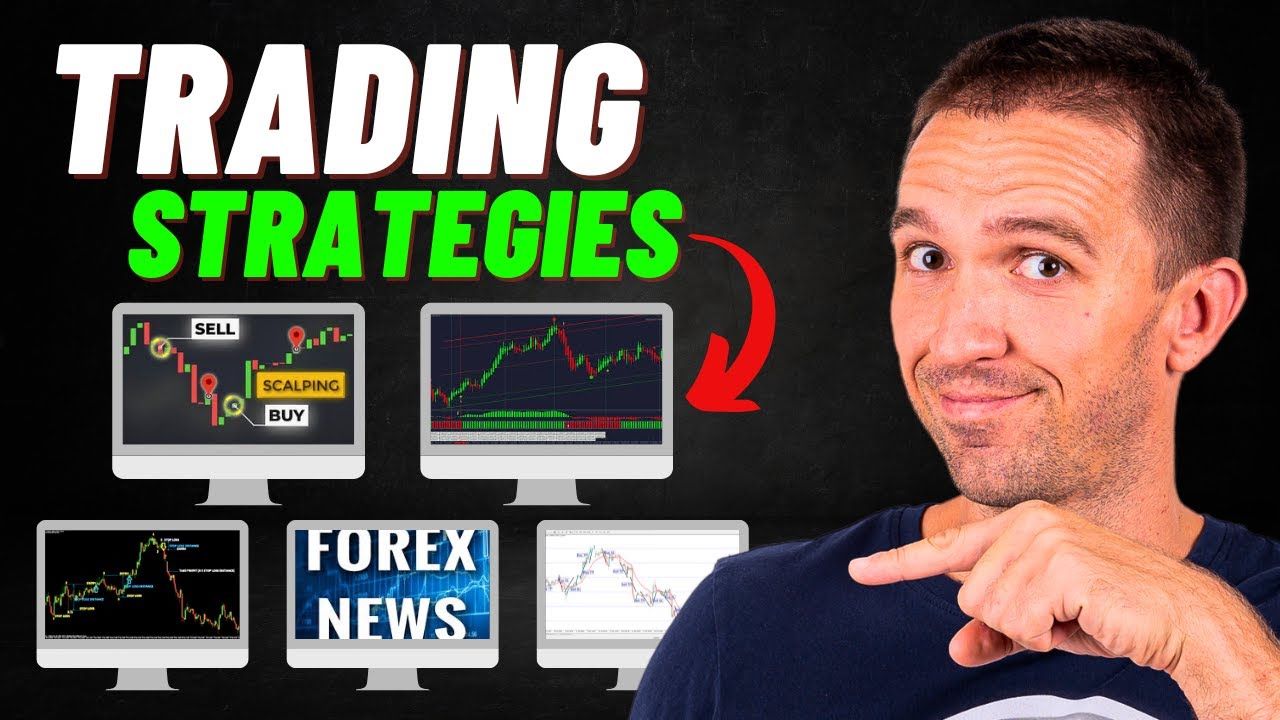
EA trading strategies are rule-based trading methods executed automatically by Expert Advisors on platforms such as MetaTrader. Common EA strategies include scalping, trend-following, range trading, swing trading, news trading, grid trading, and martingale systems. The best EA strategy depends on market conditions, account size, broker execution, risk tolerance, and whether the system has been tested with realistic spreads, slippage, and drawdown limits.
Expert Advisors do not make bad strategies good. They execute whatever logic you give them, faster and more consistently than a human would. So before choosing an EA strategy, it is worth understanding what each type actually does, where it works, and where it tends to break down.
EA Strategy Comparison: All Types at a Glance
| EA Strategy | Best Market Condition | Typical Timeframe | Main Advantage | Main Risk |
| Scalping EA | Low-spread, liquid markets | M1 to M5 | Fast entries and exits; captures small frequent moves | Spread, slippage, and execution delay erode performance |
| Trend-Following EA | Strong directional markets | M15 to D1 | Captures large sustained moves | Whipsaws and false signals during sideways markets |
| Range Trading EA | Sideways, bounded markets | M5 to H4 | Buys support and sells resistance systematically | Breakouts from the range can cause significant losses |
| Swing Trading EA | Medium-term market swings | H1 to D1 | Fewer trades and larger individual targets | Overnight gaps and longer holding-period drawdowns |
| News Trading EA | High-impact economic releases | Seconds to minutes | Captures volatility spikes around events | Slippage, spread widening, and execution failures |
| Grid EA | Ranging or mean-reverting markets | Any | Distributes entries across levels; smooths average price | Large directional moves cause compounding open losses |
| Martingale EA | Short-term mean-reversion setups | Any | Can recover losses if the market reverses | Sustained trends can blow accounts with no warning |
What an EA Trading Strategy Actually Is
An Expert Advisor is a program written in MQL4 or MQL5 that runs within MetaTrader, as documented in MetaQuotes’ official developer resources. Once attached to a chart, an EA monitors price continuously and places, manages, or closes trades automatically based on its coded logic.
The strategy inside the EA is what determines outcomes. The automation handles execution, eliminates emotional deviation from rules, and allows trading across sessions that would be impractical to monitor manually. But the code only does what the strategy says. A poorly designed trading strategy running automatically simply produces losses more efficiently than a manual one would.
There are several distinct strategy types that EA developers and traders commonly employ. Each has a specific operating logic, a set of market conditions where it performs best, and a defined failure mode.
Scalping EAs

Scalping is one of the most popular EA strategies in forex. The EA places a high volume of short-duration trades targeting small price movements, often just a few pips per trade. The approach depends on accumulating many small wins rather than capturing large directional moves.
Scalping EAs often use technical indicators such as short-period moving averages, RSI, or stochastic oscillators to time entries. Some use price action signals. The timeframe is typically M1 or M5.
The execution environment is critical. A scalping EA requires:
- Tight, stable spreads on major pairs like EURUSD or USDJPY
- Fast execution with minimal slippage
- A broker that does not restrict or penalize high-frequency EA activity
- A VPS to keep the system running continuously without connectivity interruptions
Some scalping EAs may hold positions for only seconds or minutes. Results depend heavily on spread, commission, liquidity, and broker execution quality. Short holding time does not automatically mean lower risk; transaction costs dominate the economics of scalping more than any other EA strategy type.

Trend-Following EAs
Trend-following EAs attempt to identify the direction of the market and trade in that direction until a reversal signal appears. These systems use technical indicators such as moving averages, ADX, or MACD to define when a trend is in place and when it has ended.

The advantages are clear. When markets trend, these EAs capture a significant portion of the move without requiring constant adjustment. They tend to be more forgiving of execution quality than scalping systems because targets are larger.
The challenge is that markets do not trend continuously. A trend-following EA can give back significant gains during extended sideways periods, generating a series of small losses on false signals before the next genuine trend develops. Position sizing and maximum drawdown rules are important safeguards for managing this behavior.
Range Trading EAs

Range trading EAs operate on the assumption that price will oscillate between defined support and resistance levels rather than breaking out in one direction. The EA buys near support and sells near resistance, repeating this as price bounces within the range.
Technical indicators commonly used include Bollinger Bands, RSI at extreme levels, and Keltner Channels. The approach works well in low-volatility, choppy market conditions but can fail severely when price breaks out of the range and continues in that direction.
False breakouts are a particular challenge. Range EAs need to either filter for genuine breakouts before entering, or include stop-losses placed outside the range to limit exposure when a breakout occurs and does not reverse quickly.
Grid and Martingale EAs: A Critical Distinction
These two strategy types are sometimes grouped together, which is understandable because they are often combined, but they describe different mechanics:
| Term | Meaning | Risk Level |
| Grid EA | Opens multiple orders at regular price intervals above and below current price | High |
| Martingale EA | Increases position size after each losing trade | Very high |
| Grid Martingale EA | Combines grid-level entries with increasing lot sizes at each level | Extreme |
A pure grid EA places buy and sell orders at fixed intervals, creating a net of positions that profits when price oscillates. The risk is that a sustained directional trend creates compounding open losses as every grid level on the wrong side builds up without closing.

A martingale EA doubles or multiplies lot size after a loss, betting that the market will eventually reverse. When it does, the larger position recovers earlier losses. When it does not, account damage is severe and often irreversible. The martingale approach is mathematically unsound as a standalone risk management method; it requires an unlimited account or a guaranteed market reversal, and neither exists.
Running either of these without strict daily loss limits, maximum drawdown settings, and careful monitoring is one of the riskier approaches in automated trading.
News Trading EAs
News trading EAs place orders immediately before or during high-impact economic events such as NFP, CPI releases, Federal Reserve rate decisions, or ECB announcements. The logic is that significant releases cause sharp price moves, and the EA can capture a portion of that initial spike.

The execution reality is considerably more complicated. During major news events:
- Broker spreads often widen significantly in the seconds around the release
- Slippage can fill orders at prices far from the intended entry
- Some brokers restrict or delay order execution specifically around news
News EAs designed to trade these conditions need slippage control settings, maximum spread filters, and clear definitions of which events the system should or should not trade. Economic calendars from the U.S. Bureau of Labor Statistics and central banks like the Federal Reserve and European Central Bank publish release schedules in advance, which some news EAs use to time their activation windows.
Swing Trading EAs
Swing trading EAs hold positions for hours to days, targeting larger price moves than scalping or intraday strategies. They trade on higher timeframes, typically H1 to daily charts, and use technical indicators such as MACD, RSI, Fibonacci levels, or moving average crossovers to identify entry and exit points.
The lower trade frequency means lower transaction costs overall, which suits accounts where keeping total trading costs manageable is a priority. However, holding positions overnight introduces gap risk; price can open significantly away from where it closed, occasionally beyond the intended stop-loss level.
Stop-loss and take-profit orders are essential for swing EAs because the system may not monitor the position continuously. Configuring these correctly is, I think, one of the more underappreciated parts of swing EA setup.
How to Choose the Right EA Strategy
| Trader Profile | Better EA Strategy | Avoid |
| Small account beginner | Low-risk trend-following or simple swing EA on demo first | Martingale and aggressive grid systems |
| Low-spread broker or VPS user | Scalping EA with tested execution settings | News EAs without slippage controls |
| Patient trader with limited screen time | Swing or trend-following EA | Overactive scalping robots requiring daily monitoring |
| Risk-tolerant trader with recovery capital | Grid EA with strict maximum loss limits | Unlimited martingale without hard stops |
| News-focused trader | News EA with tested slippage and spread filters | Trading every news event without filtering |
| Beginner with limited programming knowledge | Demo-tested simple EA with clear documented logic | Complex multi-strategy EA portfolios |
EA Testing Checklist Before Going Live
Employ sound risk management strategies during testing, not just during live trading. Testing with overly generous assumptions is one of the most common reasons backtested EAs fail in practice.
| Test | What to Check |
| Backtest length | Cover multiple years and different market conditions |
| Spread setting | Use realistic or variable spreads matching your broker |
| Commission | Include your broker’s actual commission per trade |
| Slippage | Model execution delay where the testing platform allows |
| Maximum drawdown | Check the deepest equity decline across the test period |
| Profit factor | Do not rely on net profit alone; a profit factor above 1.5 is a meaningful signal |
| Trade count | Ensure the sample size is large enough to draw conclusions |
| Forward test | Run the EA on a demo account in real time before live capital |
| Broker compatibility | Confirm EA trading, hedging, and scalping are permitted |
| News behavior | Test performance during and around high-impact releases |
Your Expert Advisor (EA) should be validated under your specific broker’s conditions, not just on theoretical data. Execution speeds, tick data quality, and spread behavior vary enough between brokers that a strategy passing one environment can fail on another.
Further Resources
Algo Trading Space provides documented EA configurations across multiple strategy types at algotradingspace.com/premium. The VIP club gives members access to real trading results, priority support, and early visibility on strategies in active development. Review any EA using the testing checklist above before committing real capital.
Frequently Asked Questions
What is an EA trading strategy?
An EA trading strategy is a set of rules coded into a MetaTrader Expert Advisor that automatically places, manages, and closes trades without manual input. Common EA strategy types include scalping, trend-following, range trading, swing trading, grid, martingale, and news trading. Each type suits different market conditions and carries different risk profiles. As documented in MetaQuotes’ developer resources, Expert Advisors run within MetaTrader and execute according to their coded logic regardless of the trader’s emotional state.
Which EA strategy is best for beginners?
For beginners, a simple trend-following or swing EA is generally the safest starting point. These strategies trade infrequently, have clear directional logic, and do not rely on dangerous position-sizing mechanics like martingale. Starting on a demo account with a well-documented EA allows beginners to observe how the system behaves across different market conditions before risking real capital. Martingale and grid EAs should be avoided until the trader fully understands the compounding loss risk those approaches carry.
Are grid and martingale EAs safe?
No, not without strict risk controls. Grid EAs accumulate multiple open positions that can build significant losses during sustained directional trends. Martingale EAs multiply lot size after losses, which can rapidly escalate drawdown beyond account capacity if the market does not reverse. Both approaches require hard maximum daily loss limits, maximum drawdown settings, and active monitoring. Running either without these controls is one of the higher-risk practices in automated trading. Regulators including the FCA and ASIC require brokers to publish risk warnings for leveraged products for exactly this reason.
Do scalping EAs really work?
Scalping EAs can produce positive results, but their performance is highly sensitive to execution conditions. A scalping EA that performed well in backtesting can fail in live trading if spreads are wider, slippage occurs more frequently, or the broker’s execution speed is slower than assumed. To work reliably, scalping EAs need a broker offering tight spreads and fast execution on an ECN or STP account, a VPS with low latency, and strategy settings that account for realistic transaction costs. Testing with accurate spread and commission data is mandatory.
What is the best timeframe for EA trading?
There is no universally best timeframe; it depends on the strategy type. Scalping EAs typically operate on M1 to M5 charts. Trend-following EAs perform better on M15 to daily charts where directional movements are more sustained. Swing EAs use H1 to daily timeframes. News EAs activate around specific release windows regardless of chart timeframe. The right choice is determined by the strategy’s logic, required signal frequency, and the trader’s available monitoring time and broker execution quality on that timeframe.
How do I test an Expert Advisor before going live?
Start with a historical backtest using the MetaTrader strategy tester, applying realistic spread and commission settings based on your broker’s actual specifications. Test across multiple market periods covering trending and ranging conditions. Then run the EA on a demo account for at least four to six weeks in real time to observe live execution behavior. Compare demo performance against backtest assumptions. Only transition to a live account with minimum lot sizes after the demo results align reasonably with tested expectations and the system’s risk controls have been verified.


Comments
No comments yet. Be the first to comment!
Leave a Comment
Your email address will not be published. Required fields are marked with *