

- 7/9/2026


 Marin
MarinMay 2026 Performance Update:
This Prime Scalper EA review has been updated with new live trading results, including the EA reaching its 20% X-Rating Stage 1 profit target in three weeks, the settings used on the account, updated MT5 backtest findings, new EUR/USD and GBP/USD live tests, and fresh notes on VPS latency for scalping performance.
For just $99, I found a scalping EA that’s actually making profits on a $200 account. That sentence alone probably triggers skepticism; I know it did for me. Budget-priced EAs often mean budget-quality results, and scalping systems working profitably on small accounts? Even rarer.
But here’s what caught my attention about Prime Scalper EA: it doesn’t use any of those dangerous martingale or grid strategies that eventually blow up accounts. Instead, it uses proper stop losses, holds positions for mere seconds (literally 10-42 seconds in most cases), and has generated approximately 2% profit in just a couple of weeks on my $200 live account with IC Markets.
Is 2% in two weeks earth-shattering? No. But when you consider this is a $200 account, small enough that most serious traders wouldn’t bother with it, and the EA achieved this with minimal drawdown while trading multiple currency pairs, including gold, it becomes interesting.
I’ve been testing Prime Scalper EA across both demo and live environments, analyzing its performance through detailed spreadsheet breakdowns, backtesting different configurations, and monitoring how it behaves under real market conditions with actual slippage and spreads. The results have been encouraging enough that I’m expanding my testing to additional currency pairs.
This review will show you the actual live account performance, explain how this ultra-fast scalping strategy operates, break down the extensive demo testing I conducted, discuss why broker selection is absolutely critical for this EA, and help you assess whether Prime Scalper EA deserves a spot in your automated trading portfolio.
Live Account Performance: $200 Real Money Test
Let me start with what matters most, real money results on a live account where every pip of slippage, every cent of spread, and every millisecond of execution delay impacts profitability.
The Setup
I opened a $200 account with IC Markets specifically for testing Prime Scalper EA. Why IC Markets? Because scalping systems have extremely strict requirements for trading conditions, IC Markets provides:
- Very tight spreads (critical for second-long trades)
- Fast execution speeds (essential when holding 10-42 seconds)
- Raw Spread account type (ideal for high-frequency strategies)
- Low-latency connection to their servers
Three Weeks of Results
The account started at the beginning of October, and after just a couple of weeks of trading, here’s what happened:
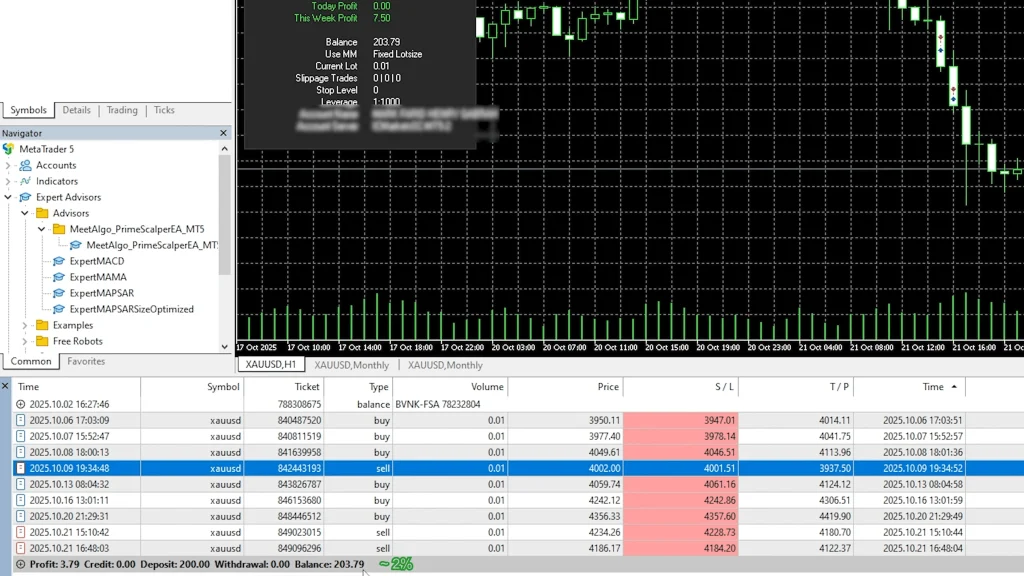
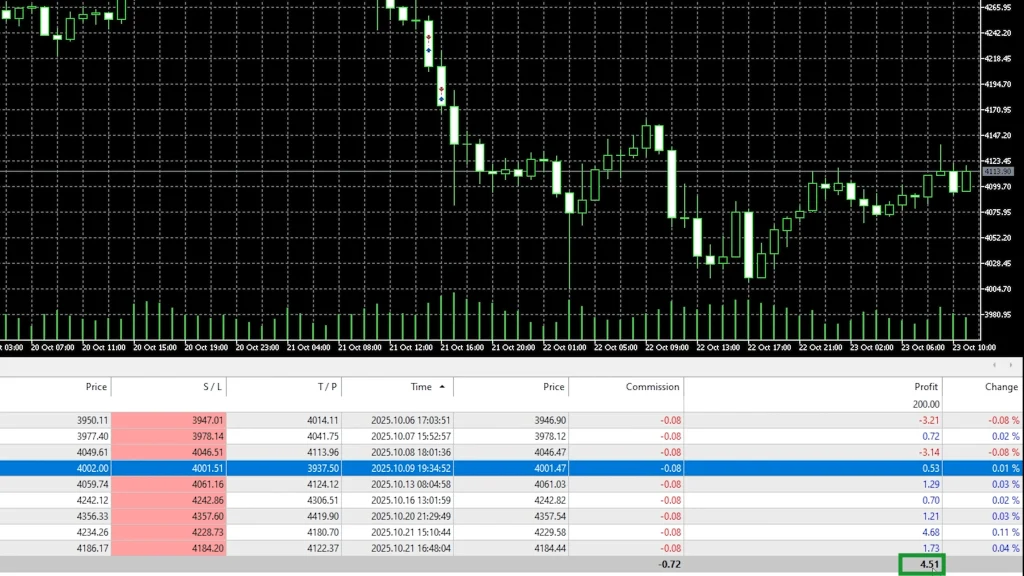
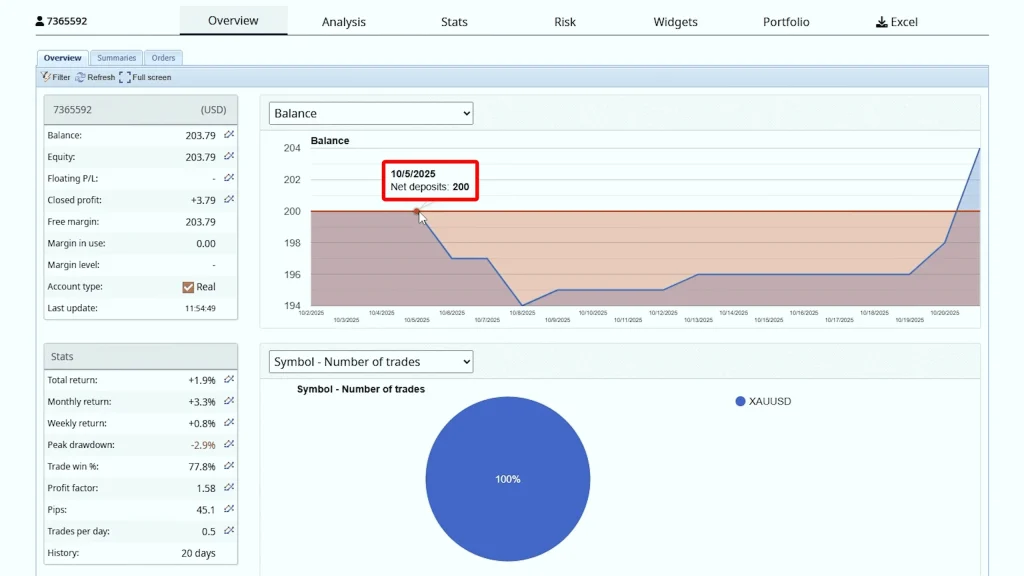
- Gross profit: $4.51
- After commissions: $3.79 net profit
- Return percentage: Approximately 2%
- Testing duration: 20 trading days
Now, $3.79 doesn’t sound impressive in absolute terms. But on a $200 starting balance, that’s nearly 2% return in less than three weeks. Annualized (though I’m cautious about such extrapolations), that pace would represent substantial returns.
The FX Blue Statistics
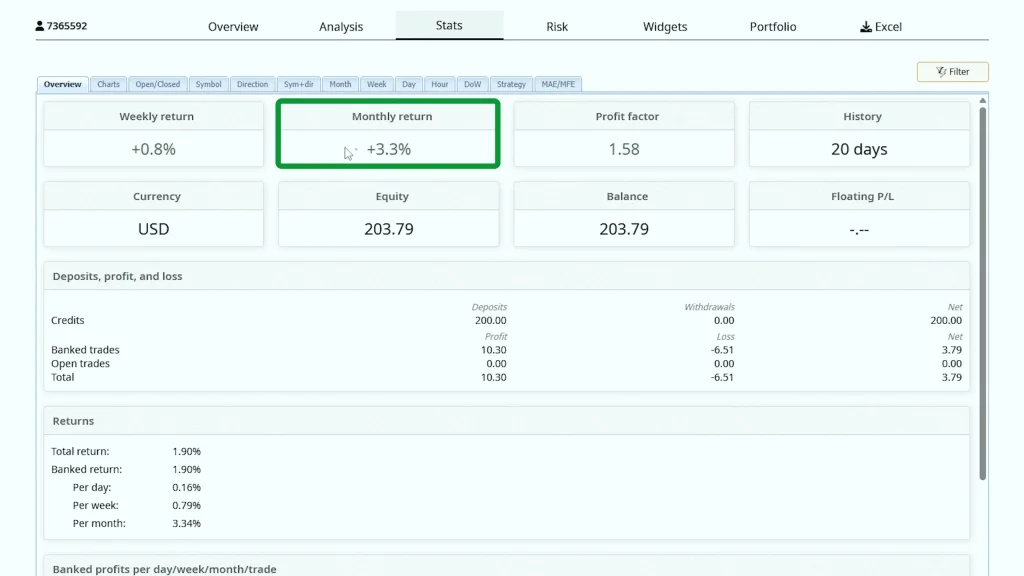
Looking at the transparent FX Blue tracking, the account shows:
- Average monthly return: 3.3% at current pace
- Profit factor: 1.58
- Initial drawdown: The account started with small losses before recovering
That profit factor of 1.58 means that for every dollar lost, the EA made $1.58 in profits. It’s not spectacular (above 2.0 is excellent), but it’s solidly profitable, and importantly, it’s achieved with real broker conditions, not idealized backtest assumptions.
The Balance Line Story
The FX Blue balance chart tells an honest story. The account started in early October, experienced some initial losses (which is normal, no strategy wins continuously from day one), then recovered and moved into profit territory.
This drawdown-then-recovery pattern actually increases my confidence rather than decreasing it. Systems that show perfectly smooth equity curves from day one often either got lucky with timing or are hiding something. Real trading involves losses, recoveries, and gradual accumulation over time.
Testing Summary: Key Metrics
| Account Type | Capital | Duration | Profit | Return | Monthly Pace | Status |
| Live (IC Markets) | $200 | 2-3 weeks | $3.79 | ~2% | 3.3% | Active |
| Demo (Multi-EA) | $100,000 | 6-7 weeks | $27,000 | 27% | Higher (aggressive settings) | Ongoing |
| Vendor Backtest | $5,000 | 7-8 years | Substantial | N/A | 2.4% max drawdown | Historical |
How Prime Scalper EA Actually Trades
After analyzing the trade history and watching the EA operate on my VPS, I can explain exactly how this ultra-fast scalping approach works.
Extreme Short Hold Times
Looking at the MetaTrader terminal history, the trade durations are remarkable:
- First trade: Opened and closed 42 seconds later
- Second trade: Opened and closed just 10 seconds later
- Typical pattern: Most trades resolve within seconds, rarely lasting even a couple of minutes
This is true scalping in its purest form. The EA isn’t trying to capture entire market moves or ride trends; it’s grabbing tiny price inefficiencies that exist for literal seconds before market conditions normalize.
Stop Loss Protection (No Martingale)
Every single trade includes a stop loss from the moment it opens. This is critically important and differentiates Prime Scalper EA from dangerous systems that average down without protection.
When I examine the trade history, I can see losing trades clearly marked. The EA doesn’t double position sizes after losses, doesn’t add multiple positions hoping for recovery, and doesn’t use grid systems. Each trade stands on its own with a defined maximum risk.
This approach means slower recovery from drawdown periods, but it also means the account won’t catastrophically fail during adverse market conditions.
Trailing Stop Functionality
The EA implements trailing stops that adjust dynamically as trades move into profit. If market conditions become unfavorable, the trailing stop protects accumulated gains or reduces potential losses.
Looking at closed trades, some show profits smaller than the initial take profit target, suggesting the trailing stop locked in gains when the price reversed before hitting the full target. This protective mechanism helps preserve capital during choppy or reversing market conditions.
News Filter Integration
Prime Scalper EA includes a built-in news filter that allows it to avoid trading during high-impact economic releases. Scalping during major news events is incredibly risky, spreads widen dramatically, slippage increases, and price movements become erratic.
The news filter automatically pauses trading around scheduled events, resuming only when market conditions normalize. This reduces exposure to the exact scenarios where scalping strategies typically fail.
Live Account Trade Analysis
| Trade Metric | Value | Significance |
| Account Size | $200 | Small account testing |
| Net Profit | $3.79 | After commissions |
| Gross Profit | $4.51 | Before costs |
| Return | ~2% | In 2-3 weeks |
| Trading Days | 20 | Active trading period |
| Average Monthly | 3.3% | Projected at the current pace |
| Profit Factor | 1.58 | Solidly profitable |
| Broker | IC Markets | Raw Spread account |
| Primary Asset | XAU/USD (Gold) | Also, forex pairsare available |
Demo Account Testing: Months of Validation
Before committing real money to Prime Scalper EA, I conducted extensive demo testing, which is exactly what I recommend everyone do with any new EA.
I created a large $100,000 demo account and placed multiple EAs from MeAlgo (Prime Scalper’s developer) on it simultaneously. This allows me to test different systems, compare their performance, and identify which strategies and assets work best.
On this demo account, Prime Scalper EA has been running since the end of August, giving us approximately 6-7 weeks of forward testing data before I moved to live.
Performance Isolation Through Data Analysis
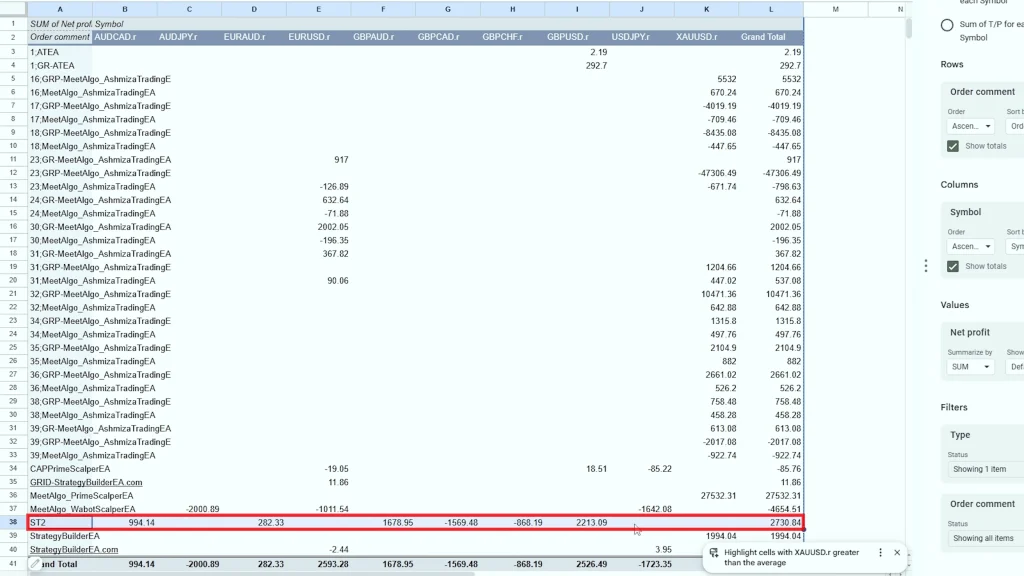
With multiple EAs running on one account, how do I isolate Prime Scalper’s specific performance? Through spreadsheet analysis.
I download the complete trade history from FX Blue as a CSV file, import it into Google Sheets, and use pivot tables to filter and analyze data by:
- EA name (order comment field)
- Currency pair (symbol)
- Trade type
- Net profit per combination
This analytical approach lets me see exactly which EA is profitable on which assets, even when they’re all trading simultaneously on the same account.
The Gold Version Performance
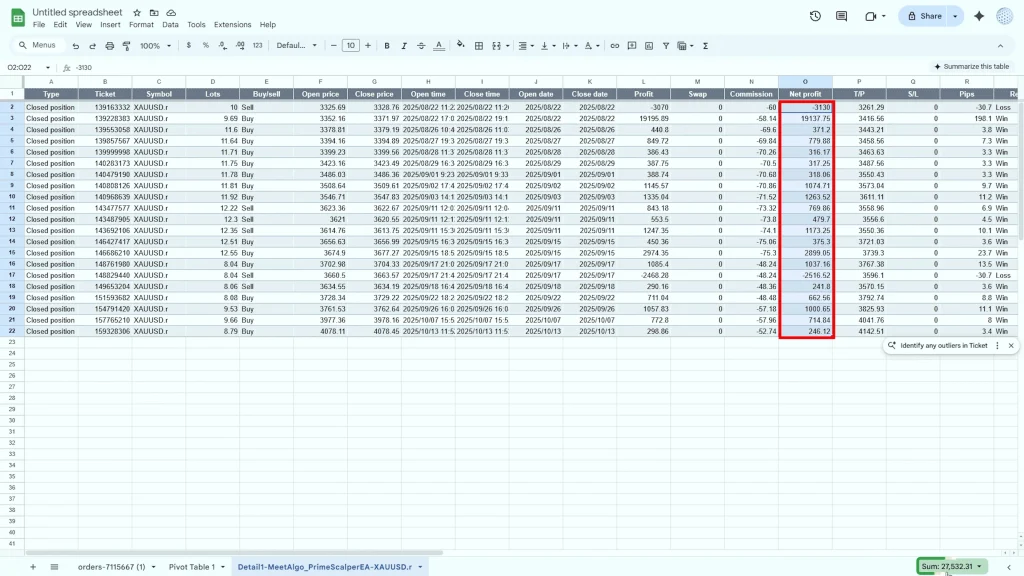
After filtering the data to show only Prime Scalper EA trades on gold (XAU/USD), the results are striking:
- Demo period: End of August to October 13th
- Net profit: $27,000
- Account size: $100,000
- Return: 27%
Now, the demo is trading with larger position sizes than my live account (higher risk settings), which explains the more aggressive returns. But even accounting for that, the performance over 6-7 weeks is impressive, and importantly, it’s forward testing, not optimized backtest results.
Why I Chose Gold for Live Testing
The spreadsheet analysis clearly showed gold as the standout asset for Prime Scalper EA. While the forex versions (trading EUR/USD, GBP/USD, etc.) were also profitable, gold delivered superior risk-adjusted returns with the demo settings I tested.
That’s why when I moved to live trading with a small $200 account, I configured Prime Scalper specifically for XAU/USD rather than spreading across multiple pairs on such limited capital.
Backtest Validation: 7-8 Years of Historical Data
Demo testing and live results are critical, but backtests provide additional historical context. Here’s what the backtesting revealed.
The Vendor’s Backtest
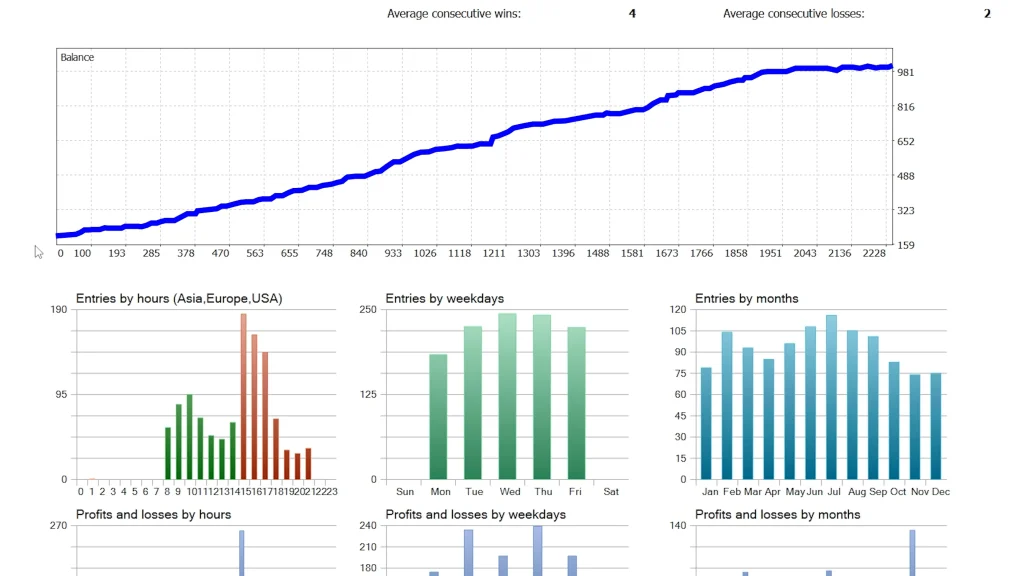
MeAlgo provides a vendor backtest showing Prime Scalper EA’s performance over 7-8 years of historical data. What initially attracted me wasn’t the impressive balance curve; it was the remarkably low equity drawdown.
- Maximum equity drawdown: 2.4%
- Testing period: 7-8 years
- Starting capital: $5,000
A 2.4% maximum drawdown over nearly a decade is exceptional. Most profitable systems experience 10-20% drawdowns periodically. This low drawdown characteristic makes Prime Scalper particularly suitable for prop firm challenges where strict drawdown limits apply.
My Custom Backtest
I took the vendor’s settings and ran my own backtest on a $200 account (matching my live testing conditions) over the last five years.
The results showed:
- Stable performance across the entire 5-year period
- Very active trading (high trade frequency)
- Consistent returns without catastrophic drawdown periods
- Balance curve steadily ascending without massive volatility spikes
The backtest confirmed what the vendor showed, this strategy has demonstrated robustness across different market conditions spanning multiple years.
Backtest Caveats
Of course, backtests never perfectly predict live performance. They don’t account for:
- Real broker slippage
- Actual spread variations during news events
- VPS latency issues
- Order rejection scenarios
- Liquidity constraints at certain price levels
That’s why I never rely on backtests alone. The combination of backtest validation, extended demo testing, and live account confirmation provides much stronger evidence than any single testing method.
Broker Requirements: Why IC Markets?
Prime Scalper EA has extremely strict infrastructure requirements. Using the wrong broker will turn a profitable system into a losing one, and I’m not exaggerating.
The Spread Requirement
According to the vendor’s recommendations, Prime Scalper needs spreads below 5 points (pips) on EUR/USD. For gold, similarly tight spreads are essential.
When trades last 10-42 seconds, every fraction of a pip in spread matters. If Broker A has 3-pip spreads and Broker B has 8-pip spreads, that 5-pip difference must be overcome on every single trade before you even start profiting.
Multiply that across hundreds or thousands of trades, and spread differences alone can mean the difference between profitable and unprofitable performance.
IC Markets Trading Conditions
I chose IC Markets specifically because:
- Raw Spread Account: This account type offers some of the tightest spreads in the retail forex industry. You pay a small commission per trade, but the spread savings more than compensate.
- Fast Execution: IC Markets routes orders quickly with minimal delay between when the EA sends the order and when it fills. For strategies holding positions for mere seconds, execution speed directly impacts profitability.
- VPS Availability: IC Markets offers VPS services under certain conditions, which solves the latency issue. Running Prime Scalper EA from your home computer on another continent from the broker’s servers would add unacceptable latency.
- Regulatory Compliance: IC Markets is properly regulated, which provides security for client funds and ensures operational standards.
The Latency Factor
VPS latency, the time delay between your trading server and the broker’s order matching engine, is crucial for scalping systems. Prime Scalper’s vendor explicitly states that low latency is essential.
I’m running the EA on a VPS located physically close to IC Markets’ servers, minimizing latency to just a few milliseconds. Running it from a home computer or distant VPS would add 50-200+ milliseconds of delay, which could prevent trades from executing at intended prices.
MeAlgo: The Developer Behind Prime Scalper
Understanding who develops an EA provides important context for evaluating its quality and ongoing support.
Company Background
Prime Scalper EA is developed by MeAlgo LLC, a company with over 14 years of experience in algorithmic trading and MetaTrader development. That’s substantial tenure in an industry where many vendors disappear after a few years.
Product Ecosystem
MeAlgo doesn’t just sell one EA, they maintain an entire ecosystem of trading tools:
- Scalping Robots: Prime Scalper, Asian Scalper, and others
- General Trading Robots: Various strategy approaches
- Copy Trading Tools: Software for copying trades between platforms
- Zone Recovery EA: One of their best-selling products
- Trade Copiers: MetaTrader to DXTrade, cTrader, and other platforms
The Lifetime Membership Offer
What particularly interested me was MeAlgo’s lifetime access deal. For a one-time payment, you get:
- Access to all current products
- All future product releases
- Lifetime updates to existing tools
- No recurring subscription fees
This model provides significant value if you’re planning to test multiple EAs or need trade copying capabilities for prop firm accounts. The lifetime membership cost is higher upfront but eliminates ongoing fees.
Asian Scalper: Worth Watching
While reviewing Prime Scalper, I noticed another MeAlgo EA, Asian Scalper, also showing strong performance in my demo testing. I haven’t fully evaluated it yet, but the preliminary results suggest it’s worth dedicated testing in the future.
This pattern of multiple profitable EAs from the same developer increases confidence in their overall development methodology and testing processes.
Settings Complexity: Powerful But Overwhelming
Prime Scalper EA offers extensive customization options, which is both a strength and a challenge.
The Configuration Options
Looking at the expert advisor properties, you’ll find settings for:
- Position sizing (fixed lots or balance-based)
- Time configuration (specific trading hours)
- Day selection (which days to trade)
- News filter parameters
- Stop loss and take profit rules
- Trailing stop behavior
- Risk management controls
- Multiple strategy variations
For experienced traders, this flexibility allows fine-tuning the EA to specific market conditions, broker characteristics, and risk preferences.
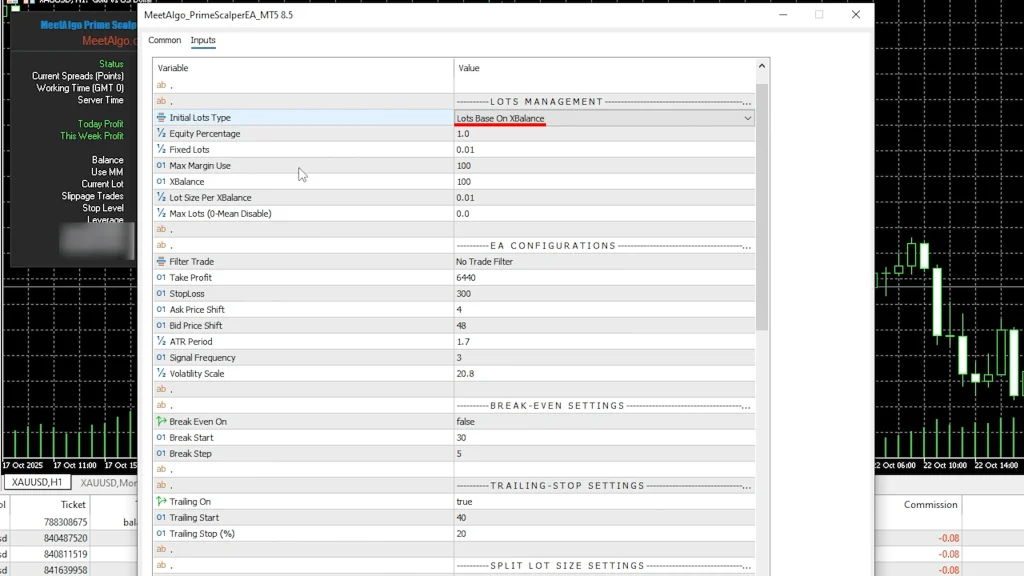
The Beginner’s Dilemma
For newer traders, the sheer volume of settings can be overwhelming. Which parameters should you adjust? How do different settings interact? What values are safe versus dangerous?
This is where vendor-provided set files become valuable. MeAlgo provides multiple configuration files for different assets and risk levels on its website, giving you tested starting points rather than forcing you to optimize from scratch.
My Live Account Configuration
On my $200 live account, I made a specific configuration choice. The default setting bases lot sizing on balance (0.01 lots per $100 of balance), which would mean 0.02 lots on my account.
Instead, I configured it for fixed lot sizing at 0.01 lots. Why? Because on a small $200 account trading gold, I wanted to control risk tightly while the EA proves itself. As the account grows, I can adjust position sizing accordingly.
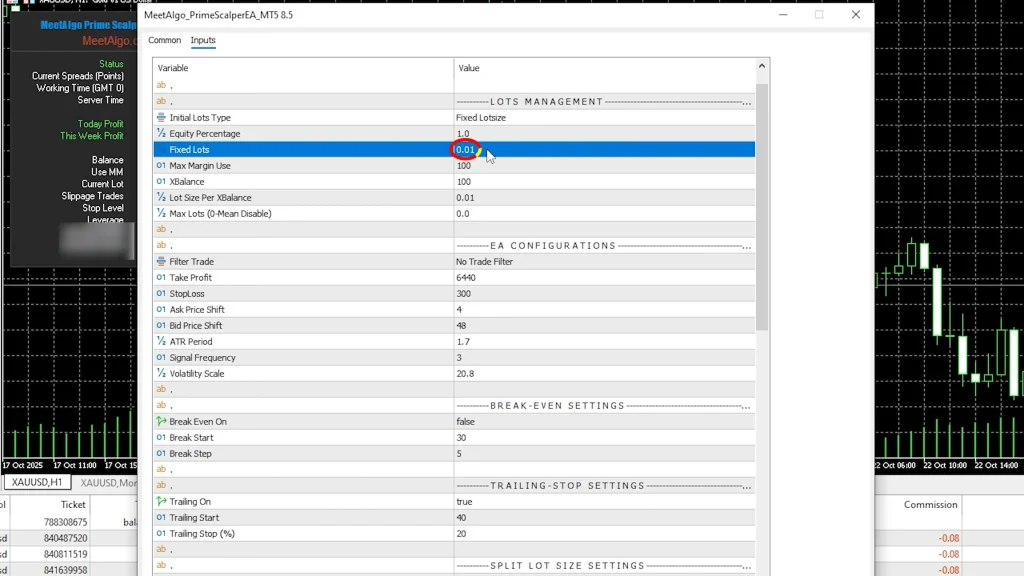
Configuration Comparison: Demo vs. Live
| Setting | Demo Account | Live Account | Reasoning |
| Account Size | $100,000 | $200 | Testing at different scales |
| Lot Sizing | Balance-based (higher risk) | Fixed 0.01 lots | Conservative on small capital |
| Primary Asset | Gold (XAU/USD) | Gold (XAU/USD) | Demo showed the best performance |
| Risk Level | Aggressive | Conservative | Proving strategy before scaling |
| Broker | Demo environment | IC Markets Raw Spread | Real conditions matter |
| Testing Duration | 6-7 weeks | 2-3 weeks | Demo longer for validation |
Pros and Cons Assessment
After several weeks of testing across demo and live environments, here’s my honest evaluation.
What Works Well
- Affordable entry point: At $99, Prime Scalper EA is accessible even for traders with limited budgets. Compare that to EAs costing $300-$1,000, and the value proposition becomes clear.
- Multiple asset capability: The EA can trade several forex pairs (EUR/USD, GBP/USD, others) and gold. This versatility means you’re not locked into a single market.
- No martingale or grid: Every trade uses proper stop losses. There’s no dangerous position averaging or sizing escalation that characterizes account-destroying systems.
- Low drawdown characteristics: The vendor backtest shows 2.4% maximum drawdown over 7-8 years, and my testing confirms controlled drawdown behavior.
- Built-in news filter: Automatically avoiding volatile news periods reduces exposure to scenarios where scalping typically fails.
- Lifetime membership option: If you buy into MeAlgo’s ecosystem, you get access to all its tools permanently, which provides ongoing value.
- Works on small accounts: Unlike many EAs requiring $5,000-$10,000 minimum, Prime Scalper functions on accounts as small as $200 (though $500-$1,000 is more comfortable).
The Challenges
- Infrastructure demands: This is perhaps the biggest limitation. Prime Scalper absolutely requires tight spreads and low latency. Using the wrong broker or an inadequate VPS will sabotage performance completely.
- Configuration complexity: The extensive settings offer power but create confusion. Beginners will struggle to optimize without guidance or access to tested set files.
- Trade hold times create execution risk: Holding positions for only 10-42 seconds means any slippage, delay, or spread widening has an outsized impact on profitability.
- Limited testing duration: My live account has only three weeks of data. While encouraging, this isn’t enough to declare long-term viability across all market conditions.
- Scalping scrutiny: Some brokers don’t allow true scalping or penalize accounts that use such strategies. Verify your broker’s policies before deploying this EA.
May 2026 Update: Prime Scalper Hits 20% on X-Rating in Three Weeks
This is a significant update. The Prime Scalper EA reached the 20% profit target on an X-Rating account in just three weeks, trading from March 26 to April 14. That works out to roughly 1% per day, which is a pace I genuinely did not expect when I started the account.
The account was a $10,000 X-Rating setup: $1,000 of my own capital, with X-Rating adding $9,000. The profit target to pass Stage 1 is 20%, or $2,000. Once reached, the profit split is 80%, meaning $1,600 is withdrawable.
After hitting the target (the account finished about $10 to $12 above the required $2,000), I paused the EA. Gold is volatile, and the market can turn quickly. Although the backtest looks stable, I decided to secure the profit rather than risk giving it back. Better to lock in the gains and move to Stage 2 than chase a few extra dollars and potentially blow the drawdown limit.
X-Rating Account Progression
| Stage | Account Size | My Deposit | Profit Target | Drawdown Limit | Profit Split |
| Stage 1 | $10,000 | $1,000 | 20% ($2,000) | $1,000 static | 80% |
| Stage 2 | $20,000 | $1,000 | 20% ($4,000) | $2,000 static | 80% |
| Stages 3-5 | Larger | $1,000 | 20% each | 10% static | Varies (decreasing split, bigger accounts) |
| Total minimum net | Significant |
Settings Used on This Account
The configuration was straightforward. Here is what I ran:
- Lot sizing: Based on X balance (0.01 lots per $100 of balance), meaning the account started at 1 lot risk per trade
- GMT offset: Manual, set to 3
- Everything else: Default settings, unchanged
- Pair: XAU/USD
- Timeframe: H1
- Platform: MetaTrader 4
I did not tweak the grid, stop loss, or any other parameters. The defaults performed well enough to pass the target in three weeks, so there was no reason to overcomplicate things.
Why X-Rating Works for Prime Scalper (and Most Prop Firms Do Not)
I know what some of you are thinking: “3.5% drawdown and 20% profit? This is perfect for a prop firm.” And I understand the logic. But here is the problem.
Prime Scalper is a true scalper. It enters and exits trades in a matter of seconds, sometimes within the same second. The majority of prop firms require you to hold positions for several minutes at minimum. That restriction alone eliminates Prime Scalper from most funded account providers.
X-Rating is different. They do not have holding time restrictions. You can trade however fast your EA needs to trade, as long as you stay within the 10% static drawdown. That static drawdown (not trailing) is also a big advantage. With a trailing drawdown, a scalper that makes quick profits followed by small losses can accidentally trigger the limit even while the account is net positive. Static drawdown avoids that issue entirely.
For anyone considering Prime Scalper on a funded account, I would strongly recommend checking the provider’s rules around trade duration before depositing anything. If they require minimum hold times measured in minutes, this EA will not comply.
MT5 Backtest Results (2026)
Backtesting on MetaTrader 4 does not work well for scalping EAs, so I ran the backtest on MetaTrader 5 with the same broker and the same settings. A few things worth noting about the backtest setup:
- Period: Start of 2026 to present
- Latency: Used real latency from my Hyonix VPS (6.65ms, US-based server)
- Tick data: Real ticks
- Commission: Manually set based on actual commission per lot from my trading history
The results:
- Total net profit: $3,057
- Maximum drawdown: 3.5%
- Performance: Very stable, very low drawdown
The backtest closely mirrors what I saw on the live account, which gives me confidence that the results are not a fluke. The combination of real tick data, actual latency numbers, and correct commission settings makes this about as realistic as a backtest can get.
New Live Tests: EUR/USD and GBP/USD
Based on positive results with gold, I decided to expand testing to two additional pairs. I have started two new live accounts:
- EUR/USD H1 with developer’s provided set file
- GBP/USD H1 with developer’s provided set file
Both are running on the same Hyonix VPS in New York, which is critical for a scalper that holds positions for seconds. Each account is funded with $200, so the risk is limited while I see how the EA performs on forex pairs in live conditions.
According to the developer’s website, Prime Scalper can trade on M30, H1, and H4 across multiple currency pairs, which would increase trade frequency if running on more than one pair. I used the pre-built set files provided by the developer for these initial tests rather than creating custom configurations.
If the results are not satisfactory, I will do further backtesting and adjust the settings. But for accounts this small, I sometimes prefer to go straight to live testing. The cost of a losing $200 account is manageable, and live data is always more valuable than backtest data for a scalper.
VIP community members specifically requested these forex pair tests, and the results will be publicly available on the Algo Trading Space platform as they develop.
The VPS Factor: Why Low Latency Is Non-Negotiable
I want to stress this because it keeps coming up across every scalping EA we test. Prime Scalper holds positions for seconds. Sometimes a single second. At that speed, your VPS latency directly affects whether a trade closes in profit or loss.
I am running this on a Hyonix VPS based in New York with 6.65 milliseconds of latency. For a scalper, that is good. Not the sub-1ms we get with some London-based setups, but strong enough for the X-Rating broker connection.
If you are planning to trade Prime Scalper on any account, please check your VPS latency first. A slow connection will quietly destroy the edge that makes this EA profitable. We learned this the hard way with our gold scalpers (covered in our Happy Gold EA review), where moving to a fast VPS made the difference between marginal and exceptional results.
Frequently Asked Questions
Can Prime Scalper EA really work on a $200 account long-term?
Yes, Prime Scalper EA technically functions on $200 accounts as demonstrated by my live testing, but I’d recommend $500-$1,000 for more comfortable operation. The $200 account uses fixed 0.01 lot sizing, which limits absolute profit potential even when percentage returns are good. Larger accounts allow proper balance-based position sizing that scales as the account grows.
The primary constraint isn’t the EA’s capability but rather that broker commissions and spreads consume a larger percentage of profits on tiny accounts. Additionally, a $200 account provides almost no buffer for drawdown periods; one or two bad trading days could significantly impact the account. For serious long-term trading, start with at least $500 to give the strategy adequate breathing room.
Why does broker selection matter so much for Prime Scalper EA?
Prime Scalper EA holds positions for literally 10-42 seconds on average, making it an ultra-fast scalping system. When trades resolve this quickly, every pip of spread and millisecond of execution delay directly impacts profitability. If Broker A has 3-pip gold spreads and Broker B has 8-pip spreads, that 5-pip difference must be overcome before profit begins; multiply that across thousands of trades, and it determines success versus failure.
Additionally, execution speed matters enormously; even 100-200 milliseconds of delay can mean orders fill at worse prices than intended. IC Markets provides the tight spreads and fast execution essential for Prime Scalper’s strategy. Using inferior broker conditions will turn this profitable EA into a losing one despite identical settings and strategy.
Is Prime Scalper EA suitable for prop firm challenge accounts?
Prime Scalper EA has characteristics that work well for prop challenges: low drawdown (vendor backtest shows 2.4% maximum over 7-8 years), stop-loss protection on every trade, and no dangerous martingale/grid strategies. However, there’s a critical consideration, some prop firms prohibit or restrict true scalping strategies, particularly those holding positions under one minute.
Before deploying Prime Scalper on any challenge, carefully read the prop firm’s terms regarding scalping, execution frequency, and holding times. Additionally, verify the challenge platform uses broker infrastructure with spreads tight enough for scalping profitability. My testing shows good performance on demo, but challenge/funded account infrastructure may differ from retail broker conditions, potentially impacting results.
How complex is Prime Scalper EA to set up for beginners?
Prime Scalper EA is moderately complex due to extensive configuration options covering position sizing, time filters, news avoidance, stop-loss behavior, trailing stops, and multiple strategy variations. Beginners will likely feel overwhelmed choosing appropriate settings without guidance. However, MeAlgo provides vendor-supplied set files for different assets and risk levels on their website, offering tested starting configurations.
My recommendation: start with vendor set files exactly as provided, run on demo for 4-6 weeks, monitor results through FX Blue tracking, then only adjust settings if you understand what each parameter controls. Don’t attempt optimization without understanding the strategy. Consider joining educational communities or VIP groups where experienced traders share working configurations and settings based on actual testing.
What VPS specifications does Prime Scalper EA require?
Prime Scalper EA requires a VPS with very low latency to your broker’s servers, ideally under 5-10 milliseconds. This typically means choosing VPS hosting geographically near your broker’s data centers. For IC Markets, that’s servers in New York or London, depending on account type.
Standard residential internet from your home adds 50-200+ milliseconds of latency, which is unacceptable for strategies holding positions 10-42 seconds. VPS costs typically run $15-30 monthly from providers like ForexVPS, BeeksFX, or directly from brokers.
Some brokers, including IC Markets, offer free VPS under certain conditions (account size, monthly trading volume). The VPS investment is mandatory, not optional; attempting to run Prime Scalper from home internet will sabotage performance through delayed order execution and missed price levels.
Does the $99 price include updates and support?
The $99 price provides the Prime Scalper EA license with standard updates and support from MeAlgo. However, if you want access to their entire product ecosystem (all current and future EAs, trade copiers, and tools), consider the lifetime membership program instead. Lifetime membership costs more upfront but eliminates recurring fees while providing access to all MeAlgo products permanently.
This becomes valuable if you plan to test multiple EAs, need trade copying functionality for prop firms, or want to experiment with different strategies across various markets. Standard $99 purchase is fine for traders focused solely on Prime Scalper; lifetime membership suits those building diversified automated trading portfolios. Both options include technical support and bug fixes.
Can Prime Scalper EA be used on prop firm accounts?
Most prop firms are not suitable for Prime Scalper because of minimum trade holding time requirements. The EA enters and exits positions within seconds, sometimes within the same second, which violates the multi-minute holding rules at most funded account providers. X-Rating is one exception; they allow any trade duration as long as you stay within the static 10% drawdown. Always verify your provider’s rules regarding scalping and minimum hold times before using Prime Scalper on a funded account.
Where to Learn More
If you’re interested in exploring Prime Scalper EA further or want to see current pricing and the lifetime membership options, I’ve compiled resources on Algo Trading Space.
Find everything here: algotradingspace.com/robots/commodities/prime-scalper-ea
The page includes links to MeAlgo’s official website, where you can purchase Prime Scalper EA, information about the lifetime access program, and access to my ongoing transparent tracking so you can monitor continued performance.
Full transparency: purchases through that page provide a commission supporting ongoing independent testing and honest reporting. But whether you buy through my link or directly, please test extensively on the demo first, and critically, verify your broker can support true scalping strategies before committing real capital.
I’ll continue running Prime Scalper EA on my live account, expanding testing to additional currency pairs, and updating results publicly so you can see exactly how it performs over the coming months as we gather more data.
For traders interested in deeper insights, Algo Trading Space offers a VIP Club that provides exclusive access to our complete trading results dashboard, priority support, and early intelligence on high-performing EAs before they become public knowledge. Members also get downloadable set files, access to our private Discord community, and our full course library.
Testing Transparency Statement
This review reflects approximately 2-3 weeks of live testing on a $200 IC Markets account ($3.79 profit, ~2% return) and 6-7 weeks of demo testing on a $100,000 multi-EA account ($27,000 profit from Prime Scalper gold version only). All performance is tracked transparently via FX Blue. Testing duration is relatively short; long-term viability requires extended validation. Prime Scalper EA is an ultra-fast scalping system with extreme infrastructure sensitivity; broker spread/execution conditions dramatically impact results.
The EA uses stop losses on every trade with no martingale/grid strategies, providing a controlled risk profile. Vendor backtest shows 2.4% maximum drawdown over 7-8 years, supporting low-risk characteristics. Configuration complexity may overwhelm beginners despite powerful customization options. Always conduct extensive demo testing with your specific broker/VPS setup before live trading.
Past performance never guarantees future results. Scalping strategies face execution risks that can transform profitable backtests into unprofitable live trading if the infrastructure is inadequate.