 Petko Aleksandrov
Algorithmic trading has changed how many people approach the forex market. What once felt like something reserved for institutional desks is now accessible to retail traders through platforms like MetaTrader, shared code libraries, and communities built around automated systems.
That said, not every strategy delivers, and I think it matters to be honest about that upfront. This article covers the most commonly used algorithmic trading strategies in forex, what makes each one tick, and where they tend to fall short.
The top forex algorithmic trading strategies in 2026 are trend following, mean reversion, statistical arbitrage, grid trading, scalping, and event-driven rebalancing. Trend following is best for directional markets; mean reversion works better in ranges. Scalping requires low spreads and fast execution. Arbitrage is generally unsuitable for most retail traders because latency and broker conditions matter more than strategy logic alone.
| Strategy | Best Market Condition | Best For | Key Risk | Execution Demand |
| Trend following | Strong directional markets | Beginners to intermediate algo traders | Whipsaws in sideways markets | Moderate |
| Mean reversion | Ranging markets | Traders using statistical indicators | Large losses during trends | Moderate |
| Statistical arbitrage | Correlated-pair divergence | Advanced traders | Model breakdown and execution cost | High |
| Grid trading | Stable ranges | Bot users with strict risk limits | Runaway losses during breakouts | Moderate |
| Scalping | Liquid, low-spread sessions | Advanced traders with VPS/broker optimisation | Spread, slippage, latency | Very high |
| Event-driven rebalancing | Scheduled institutional flows | Institutional-style traders | Data access and timing precision | High |
What Is Forex Algorithmic Trading?
At its core, algorithmic trading means using a coded set of rules to execute trades automatically. Instead of watching charts and clicking buttons manually, a trading algo handles entries, exits, position sizing, and sometimes risk management without human input in the moment.
In the forex market, this matters a lot. Price moves fast, spreads change, and opportunities open and close within seconds. Algorithms can respond in ways that humans simply cannot, at least not consistently. That is the basic appeal.
The core components of any forex algorithm typically include:
- Entry logic: conditions that trigger a buy or sell order
- Exit logic: conditions that close the trade, including take-profit and stop-loss levels
- Risk management rules: position sizing, maximum drawdown limits, exposure caps
- Execution layer: the connection between the strategy and the broker’s order system
Where traders differ is in how they build these components, and that is where strategy choice comes in.
Why Strategy Choice Matters More Than You Think
There is a temptation to assume that any algorithm running on a good platform will outperform manual trading. It will not. The strategy underneath still determines whether you make or lose money.
A poorly designed system running automatically just loses money faster. Execution speed helps, but it cannot fix flawed logic. This is why understanding each approach in real depth matters far more than just recognising the names.
The forex market also does not behave as one consistent environment. It trends at times and ranges at others. Market volatility spikes during news releases and quiets in the early Asian session. A strategy that performs well in trending conditions can fall apart in sideways price action. Understanding the conditions each strategy requires is, honestly, one of the most overlooked parts of algorithmic trading for newer traders.
The Main Algorithmic Trading Strategies Used in Forex
1. Trend Following
Trend following is probably the most accessible entry point into algorithmic trading. The core idea: identify a directional move and trade in that direction until the move ends. Algorithms built on this approach typically use technical indicators to define when a trend is in place and when it has reversed.
Common tools include:
- Moving average crossovers (for example, a fast moving average crossing above a slow one as a buy signal)
- Directional indicators like ADX
- Channel breakout systems
The appeal is that trend following does not require predicting where price will go. It reacts to what price is already doing. That feels more grounded than systems claiming to know what happens next.
The limitation is that trends do not happen all the time. Trend-following algorithms tend to give back gains during choppy, sideways periods because entries keep triggering in conditions they were not built for. Drawdown control matters a great deal with these systems.
Failure modes: False breakouts during low-liquidity sessions; moving average crossovers generating repeated small losses during consolidation. Position sizing rules and session filters help limit this.
2. Mean Reversion
Mean reversion strategies work on a different assumption: that price tends to return to an average level after moving too far from it. In ranging forex market conditions, this can work quite well.
These algorithms typically:
- Define a central value, often a moving average or a statistical mean
- Identify when price has moved an unusual distance from that value
- Enter a trade expecting price to return toward the center
The danger is straightforward. If a market is trending strongly, it can keep moving away from the mean for a long time, stacking up losses in the process. Many traders pair trend-following and mean reversion systems together to balance exposure across different market conditions, which is a reasonable approach if you understand how each one behaves.
Failure modes: Persistent trending reduces profitability significantly. Mean reversion systems can show strong backtests in historical ranging periods and then fail in live trending environments.
3. Statistical Arbitrage
Statistical arbitrage, a more precise form of arbitrage trading, looks for pairs of correlated instruments that have diverged further than usual. Rather than exploiting a simple pricing discrepancy between brokers, it models the expected relationship between two instruments and trades the divergence.
This is more accessible to retail traders than pure latency arbitrage, but it still demands solid coding skills and careful execution. The spread you pay matters, and so does model accuracy. If the underlying correlation breaks down, the trade logic fails.
Failure modes: Correlation breakdowns during risk-off events; execution costs eroding statistical edges; overfitting historical correlation data.
4. Grid Trading
Grid trading involves placing buy and sell orders at regular intervals above and below a set price, creating a grid of positions. As price moves up and down, the algorithm captures profits from each completed level.
This works reasonably well in ranging markets where price oscillates within a defined zone. The risk is a directional breakout. Positions on the wrong side can accumulate quickly, and without hard risk limits, losses can become substantial. Trading bots built on grid logic are widely available, but the risk profile deserves careful thought before running one with real capital.
Failure modes: Trending breakouts from the grid range; insufficient account equity to withstand drawdown; no maximum loss rule defined before deployment.
5. Scalping Algorithms
Scalping targets very small price moves, often just a few pips, and generates returns through high trade volume. A scalping algorithm might open and close dozens of positions in a single session.
This places heavy demands on execution quality. The spread paid on each trade becomes highly significant when your target profit per trade is small. A two or three pip spread on a trade targeting five pips means a large portion of expected gain is gone before the trade starts. Running scalping strategies also requires a VPS to maintain consistent uptime. Latency between your server and the broker’s systems can determine whether an order fills at the intended price or slips enough to destroy profitability.
Failure modes: Spread widening during news events; VPS latency spikes; broker restrictions on high-frequency order flow.
6. Index Fund Rebalancing
Index fund rebalancing is less commonly discussed in retail forex circles, but it is worth understanding. Large funds tracking indices must periodically buy and sell assets to maintain correct weightings. These rebalancing events create predictable order flow that some algorithms are designed to trade alongside.
In forex, this applies mainly to currency pairs associated with international equity indices. It is a more institutional-style approach, and running it effectively requires data access and timing precision most retail setups will not have. Still, understanding that these flows exist is useful background context.
Failure modes: Timing errors; lack of institutional data feeds; increasing awareness of the strategy reducing its edge as more participants target the same events.
Which Strategy Should You Use?
This is probably the question most traders actually want answered. The honest answer is that it depends on your infrastructure, skills, capital, and risk tolerance. Here is a practical breakdown:
| Trader Type | Recommended Strategy | Avoid |
| Beginner | Trend following with strict stop-loss rules | Arbitrage and high-frequency scalping |
| Small account | Swing-style trend following or simple mean reversion | Scalping with wide-spread brokers |
| Advanced coder | Statistical arbitrage or volatility-adaptive systems | Black-box purchased bots |
| Low-risk preference | Lower-frequency trend systems with drawdown limits | Martingale or grid systems without hard stops |
| VPS and ECN broker user | Scalping or low-latency execution systems | Strategies sensitive to news spikes |
The Role of MetaTrader in Forex Algorithmic Trading
MetaTrader remains the most widely used platform for retail forex algorithmic trading in 2026. Both MT4 and MT5 support custom algorithms written in MQL4 and MQL5, MetaQuotes’ native programming languages for automated strategy development. Most forex brokers offer MetaTrader as a standard option, which makes the ecosystem around it large and well-documented.
For traders new to coding, the MetaTrader community has produced a substantial volume of shared scripts, libraries, and examples. MT5 in particular offers more advanced order types, broader access to market depth data, and support for more asset classes compared to MT4. For a new build rather than an adaptation of an existing system, MT5 is the better starting point.
It is worth noting that MetaQuotes documentation distinguishes clearly between MT4 and MT5 in terms of testing environments: MT5’s strategy tester supports multi-currency and multi-timeframe backtesting, which MT4 does not handle natively. That is a real practical difference when you are trying to test a strategy across correlated pairs.
How to Backtest a Forex Algorithm Properly
Backtesting runs your algorithm against historical data to see how it would have performed. It is an essential step, but one that gives traders false confidence if done carelessly.
Common Backtesting Mistakes
- Overfitting: tuning parameters so precisely to past data that the strategy stops working on new data
- Unrealistic execution assumptions: backtests often assume perfect fill prices, which live trading does not deliver
- Ignoring spread changes: spreads widen significantly during news events and low-liquidity sessions
- Survivorship bias: testing only on currency pairs that historically performed well
A Practical Backtesting Checklist
- Use tick data where possible rather than OHLC bar data
- Apply realistic spread and commission values for your actual broker
- Separate your data into in-sample (training) and out-of-sample (test) periods
- Do not touch the test set until the strategy is fully defined
- Run a forward test on a demo account before going live
- Check performance across multiple market conditions, not just one period
A useful backtest is best treated as a way to rule out bad ideas rather than confirm good ones. Even a strong backtest is not a guarantee of future performance.
Best Indicators by Strategy Type
Not every indicator suits every approach. Here is a practical reference:
| Strategy | Commonly Used Indicators |
| Trend following | Moving average crossovers, ADX, Parabolic SAR |
| Mean reversion | Bollinger Bands, RSI, standard deviation channels |
| Statistical arbitrage | Correlation coefficients, Z-score, cointegration tests |
| Grid trading | ATR (for grid spacing), support/resistance levels |
| Scalping | Fast stochastic, short-period moving average, order flow tools |
The moving average family is probably the most widely used across strategy types, largely because it is simple to implement and easy to test. That said, no indicator is inherently predictive. They are tools for filtering conditions, not signals with guaranteed outcomes.
Broker Requirements by Strategy Type
Not every broker is a good fit for algorithmic trading. The table below summarises the practical requirements:
| Strategy | Minimum Spread Requirement | Account Type | VPS Needed? | Notes |
| Trend following | Moderate (up to 2 pip spread acceptable) | Standard or ECN | Optional | Less sensitive to execution quality |
| Mean reversion | Low to moderate | ECN preferred | Optional | Slippage matters more at frequent entry points |
| Statistical arbitrage | Very low | ECN/STP | Yes | Execution speed and cost are critical |
| Grid trading | Moderate | Standard or ECN | Recommended | Requires reliable uptime |
| Scalping | Very low (under 1 pip on majors) | ECN/STP only | Yes | Many brokers restrict scalping; confirm before running |
| Event-driven rebalancing | Low | Institutional-grade | Yes | Requires data feeds |
A CFD broker that suits manual trading may not be the right environment for running algorithms continuously. Test execution quality, particularly around spread consistency and fill rates, before committing real capital to an automated strategy. Retail traders in the EU and UK should also verify that their chosen forex brokers operate under FCA, ESMA, or equivalent regulatory frameworks that cover automated execution.
Retail vs. Institutional Feasibility
It is worth being direct about this, because a lot of content on algorithmic trading glosses over it.
Some strategies described in retail trading guides are, in practice, only viable for institutional participants:
- Pure latency arbitrage: requires co-location or proximity hosting next to exchange infrastructure, well beyond standard retail VPS setups
- High-frequency scalping at millisecond speeds: retail brokers do not offer the direct market access speeds needed
- Large-scale index rebalancing front-running: requires institutional data and order routing
This does not mean algorithmic trading is out of reach for retail traders. Trend following, mean reversion, grid trading, and even statistical arbitrage at moderate frequencies are all achievable with MetaTrader, a reliable VPS, and a sensible ECN broker. The realistic ceiling is just different.
Being clear about what is and is not achievable at a retail level is, I think, more useful than suggesting every institutional strategy is on the table.
Risk Management in Algorithmic Forex Trading
No strategy discussion is complete without addressing risk management. Algorithms can execute faster than any human, which also means they can build losses faster if the logic is wrong or market conditions change unexpectedly.
A few principles worth building into any system:
- Maximum drawdown limits: define the point at which the algorithm stops trading entirely
- Position sizing rules: risk a defined percentage of account equity per trade, not a fixed lot size
- Correlation awareness: if running multiple algorithms, check whether they are likely to trigger simultaneous losses
- News filters: many traders pause automated systems during major economic announcements
One thing I have noticed is that traders often invest significant effort in the entry side of their algorithms and much less in the exit and risk management layer. The entry is the interesting part to build. Risk management feels dry. But it is typically where the most significant damage occurs when something goes wrong.
Practical Tips for Getting Started in 2026
If you are approaching algorithmic trading for the first time, here is what I would focus on:
- Learn one strategy type thoroughly before combining approaches
- Start on a demo account and run your algorithm for at least several weeks across different market conditions
- Keep early algorithms simple: complex rule sets have more failure points
- Document every design decision so you can review the reasoning later
- Plan for drawdown before going live: define the acceptable loss threshold before it becomes emotional
- Use a VPS: connection stability is not optional for automated trading
Traders who do well with algorithmic systems tend to approach it more like software development than traditional trading, lots of iteration, lots of data review, and less guesswork.
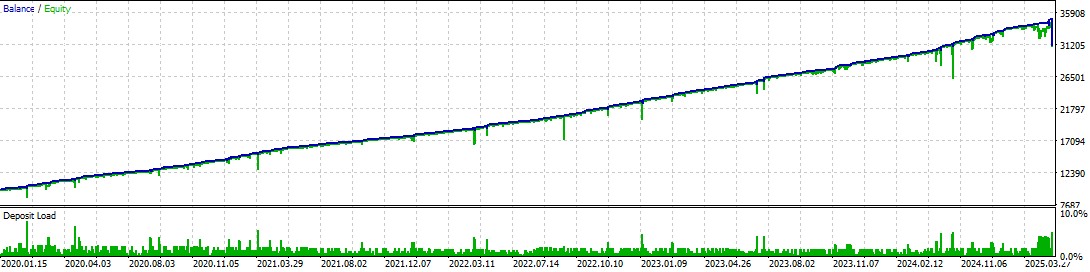
Resources: Traders looking for documented strategy examples and verified results can review premium configurations at Algo Trading Space. Evaluate any third-party system using verified results, drawdown history, broker assumptions, and live forward testing before committing real capital. The Algo Trading Space VIP club also gives members access to real trading results, priority support, and early insights into what is performing across different market conditions.
Frequently Asked Questions
What is the most effective forex algorithmic trading strategy for beginners?
Trend following is generally the most suitable starting point for traders new to algorithmic trading. The logic is straightforward: enter in the direction of an established move and exit when conditions reverse. It does not require predicting future price action, only reacting to what is already happening. Moving average crossover systems are a commonly used starting structure. Beginners should pair any trend-following algorithm with strict stop-loss rules and a maximum daily loss limit before running it on a live account.
Do I need coding skills to run algorithmic trading strategies?
Not necessarily. MetaTrader includes a visual strategy builder for basic systems, and pre-built algorithms are available for purchase or download. That said, having foundational coding knowledge in MQL4, MQL5, or Python gives you real control over how a strategy behaves and makes it far easier to identify problems when performance deviates from expectations. Even a basic understanding of how the code is structured makes a meaningful practical difference when something is not working.
How much capital do I need to start forex algorithmic trading?
There is no fixed minimum, but small accounts face genuine challenges. Spreads take up a larger proportion of small profits, and risk management rules become harder to apply with limited equity. Most traders validate their strategy on a demo account first, then transition to a live account with capital they are genuinely comfortable risking. Realistic drawdown expectations should be factored into that decision before the first live trade.
Is algorithmic trading legal in forex markets?
Yes. Algorithmic trading is legal and widely practised in forex markets globally. Retail traders run automated systems routinely through standard broker accounts. Some brokers restrict specific strategy types, particularly high-frequency scalping, so it is worth reviewing a broker’s terms and conditions before deploying certain algorithms. Regulatory bodies including the FCA, ESMA, CFTC, and NFA do not prohibit retail algorithmic trading; requirements focus primarily on broker oversight rather than the end trader.
What is the difference between a trading bot and a trading algorithm?
The two terms are often used interchangeably, but they describe different things. A trading bot is the software that executes trades automatically. A trading algorithm is the underlying logic and rule set governing what trades to make and when. The bot is the vehicle; the algorithm is what drives it. In retail forex practice, most traders use both terms to mean the same thing: a coded system that opens and closes positions without manual intervention in real time.
What are the main failure modes of algorithmic trading strategies?
Each strategy type has specific failure conditions. Trend-following algorithms produce losses during extended sideways price action. Mean reversion systems fail during persistent trends. Grid trading generates compounding losses when price breaks out directionally without a hard stop. Scalping becomes unprofitable when spreads widen or VPS latency increases. Across all strategy types, overfitting during backtesting is one of the most common reasons a system that looks strong historically fails in live trading conditions.
Can the same algorithmic trading strategy work across multiple currency pairs?
Strategies need to be matched to the pairs they are applied to. Major pairs such as EUR/USD and GBP/USD offer tighter spreads and deeper liquidity, making them better suited to strategies that depend on frequent execution. Exotic pairs typically carry wider spreads and less predictable price behaviour, which can significantly reduce the viability of the same strategy. It is generally more effective to test and refine a strategy for specific pairs rather than assuming it transfers directly without adjustment.
Wrapping Up
Forex algorithmic trading strategies offer real advantages, particularly around execution consistency and the removal of moment-to-moment emotional decisions. But they do not remove the difficulty of trading; they relocate it. Instead of making judgment calls at the chart, you are making them in the code. The quality of those decisions still drives outcomes.
Trend following, mean reversion, statistical arbitrage, grid trading, and scalping each have conditions where they work and conditions where they do not. Understanding that distinction is perhaps the most practically useful thing to take from this kind of overview.
Running a well-designed algorithm on a reliable platform with proper risk management in place gives a trader real advantages. Getting there requires time, testing, and a clear-eyed view of what each strategy can and cannot do.
Further Reading