

Risk warning. Leveraged products carry substantial risk to your capital. Most retail clients lose money trading them. Nothing below is personalized advice, and avoiding every error described here still leaves you exposed to loss.
The Direct Answer
The trading mistakes that empty beginner accounts fastest are, in order: committing too much on a single position, trading without a defined exit, chasing losses with bigger positions, and adding to something already going wrong.
Notice what’s absent from that list. Insufficient study, weak platform familiarity, and choosing a poor broker all matter, and none of them destroy capital at the speed the four above do. Somebody with mediocre knowledge and disciplined sizing survives long enough to improve. Somebody well-read who commits a third of their balance to one idea does not.
The 2023 version of this page covered four themes, all of them educational rather than financial, and never ranked anything. This rewrite orders errors by how much damage they typically cause, then explains prevention for each.
The Ranking
| Rank | Error | Why it costs so much |
| 1 | Oversized positions and heavy gearing | A modest adverse move produces a disproportionate loss |
| 2 | No predefined exit level | Losses expand well past whatever you intended |
| 3 | Widening a protective level as price approaches | Converts a planned small loss into an uncontrolled one |
| 4 | Revenge entries after a loss | Frequency and exposure both rise while judgment falls |
| 5 | Adding to losing positions | Exposure grows while the original reasoning is already failing |
| 6 | Trading rules nobody ever tested | Capital at stake with no evidence of an edge |
| 7 | Ignoring spread, commission, and slippage | A marginal approach turns unprofitable after costs |
| 8 | Going live before learning the platform | Operational errors that had nothing to do with markets |
| 9 | Trusting unverified brokers or sellers | Withdrawal problems, fraud, manipulated claims |
| 10 | Keeping no record | The same error repeats because nobody noticed it |
Ranks one through five are behavioural and arithmetic. Six through ten are procedural. Both categories cost money; the first group does it faster.
What the Numbers Look Like
Abstract warnings persuade nobody, so here’s the arithmetic.
| Behaviour | Planned loss | Actual loss |
| Correct volume, exit honoured | 1% | 1% |
| Volume doubled | 1% | 2% |
| Exit widened to twice the distance | 1% | 2% |
| Volume doubled and exit widened | 1% | 4% |
| Then a revenge entry at double again | 1% | 8% or worse in one session |
Four decisions, none of them individually dramatic, and a planned one percent becomes eight. That compounding is why the ranking above puts sizing and exit discipline ahead of everything educational.
Recovery arithmetic makes it worse. Losing 8% requires roughly 8.7% to get back to even. Lose 30% and you need 43%. Lose half and you need to double. The hole deepens faster than the climb out.
Error 1: Committing Too Much
Leverage lets a small balance control a large exposure, which is the entire attraction and the entire problem.
Consider a $5,000 balance. Someone opens a position sized so that a 50-pip move against them costs $1,000. That’s 20% gone on a move most instruments make in an ordinary session. Two of those and the balance is barely two-thirds of what it was, with the psychological damage compounding the financial.
Regulators across the UK, Europe, and Australia capped retail leverage precisely because of losses like that, which tells you how common the pattern is.
The prevention is arithmetic done beforehand rather than a feeling:
| Input | Example |
| Balance | $5,000 |
| Fraction at stake | 1% |
| Maximum planned loss | $50 |
| Distance to your exit | 25 pips |
| Permitted value per pip | $2.00 |
| Volume | Derived from your broker’s contract specification |
Divide what you’re willing to lose by that distance. That gives value per pip, which converts into volume once you check the instrument’s specification and your balance currency.
Consequence worth internalizing: a wider exit means a smaller position, not more exposure. Beginners routinely hold volume constant and let risk float with whatever the chart offers, which is precisely backwards.
Error 2: No Predefined Exit
New traders obsess over getting in. Signals feel like the skill, and exits feel like admin.
Yet the exit is where your loss gets defined. Without one placed at entry, “how much can this cost me” has no answer, and positions that should have closed for a small amount stay open through hope.
Four things to settle before opening anything:
- Where the reasoning fails: Not where the loss becomes uncomfortable, but where the chart says you were wrong.
- What that costs: In currency and as a percentage of balance.
- Whether it can move: Only in the profitable direction, ever.
- When you accept it: Before the position is open, not while watching it.
Place the protective level the moment you open. If you’re running automated logic, it handles this; if not, do it manually before you do anything else.
Error 3: Widening the Level
Among the most expensive habits available, and it feels reasonable in the moment.
Price approaches your exit. You examine the chart again, find a reason the level is “too tight”, and move it. Sometimes price turns and you feel vindicated, which is the worst possible outcome because it teaches you the behaviour works.
Eventually it doesn’t. A planned 1% becomes 4%, then 10%, and the position that was going to teach you something cheap teaches you something expensive instead.
The rule is simple and absolute: exits move toward profit, never away. Anyone who cannot follow that manually should automate it, since code doesn’t negotiate with itself at two in the morning.
Error 4: Revenge Entries
Loss arrives. Something in you wants it back immediately.
What follows is recognisable: a larger position than usual, one of those setups you’d normally skip, a shorter timeframe because waiting feels intolerable, and a daily limit quietly ignored. Emotional trading of this kind produces the eight-percent session in the table above.
Risk management here is structural rather than willpower-based:
- A daily loss ceiling for the account, defined in advance, after which the platform closes.
- A cooling period following any loss, even fifteen minutes.
- Maximum trades per day, capped regardless of what appears.
- Fixed volume, so nothing can be doubled in the heat of a bad afternoon.
I have done this myself, years ago, and the sessions I remember worst weren’t the ones with bad analysis. They were the ones where I kept going after I should have stopped.
Error 5: Adding to Losers
Averaging down means increasing exposure to something already moving against you, on the reasoning that a better average price improves the eventual outcome.
Occasionally it does. The problem is the distribution: this approach produces many small recoveries and occasional catastrophic losses, because the times it fails are the times price kept going.
Martingale variants, where volume doubles after each loss, formalize the same flaw. Equity curves look wonderfully smooth right up until the sequence meets a move that doesn’t come back, at which point the damage is nonlinear.
There’s a related error worth naming: correlated exposure. Three positions can feel diversified while expressing one view. Long EURUSD, long GBPUSD, and short USDJPY is a single bet against the dollar wearing three costumes, and they will lose together.
Error 6: Untested Rules
Now we reach the procedural group, and this is where the original article started.
Buying or copying an approach without evidence means committing capital to something whose behaviour nobody has established. The seller’s screenshots are not evidence. Neither is a strong recent month.
What a credible historical test includes:
| Element | Why it matters |
| Exact rules | Ambiguity means you’re testing something else |
| Period covered | One favourable stretch proves nothing |
| Number of trades | Below a few hundred, results are noise |
| Spread and commission | Costs change marginal approaches into losing ones |
| Slippage assumption | Simulations frequently assume none |
| Out-of-sample segment | Separates fitted results from real ones |
| Maximum drawdown | The figure determining whether you could hold on |
| Profit factor | Gross gains against gross losses |
| Parameter sensitivity | Fragile settings signal curve fitting |
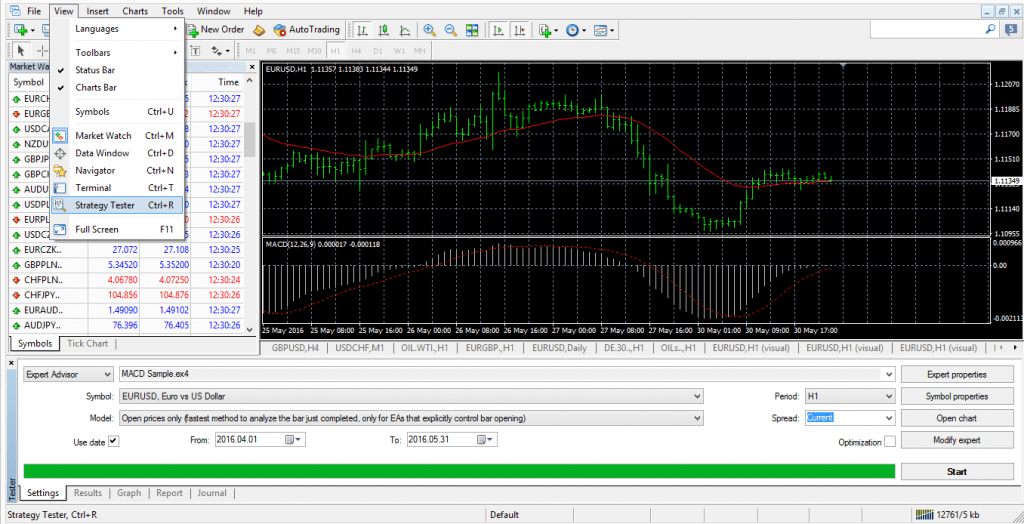
| Forward testing | Behaviour under current conditions |
One correction to the earlier version: I wrote that historical testing gives an idea of how an approach will perform in future. That overstated it. Testing shows how rules would have behaved on past data under stated assumptions, and it reveals weaknesses. Predicting returns is beyond what it can do.
Error 7: Ignoring Costs
Spread, commission, slippage, and overnight financing all quietly reduce results, and beginners frequently model none of them.
Consider forty trades monthly at one mini lot with a 1.5 pip spread plus two pips of average slippage. That’s a meaningful monthly figure before any market movement, and an approach clearing a small edge before costs can sit underwater afterward.
Frequency multiplies this. Someone opening five positions daily pays those costs roughly a hundred times a month.
Error 8: Going Live Too Early
Which brings us to the demo argument the original article led with, and which I still believe, with one qualification.
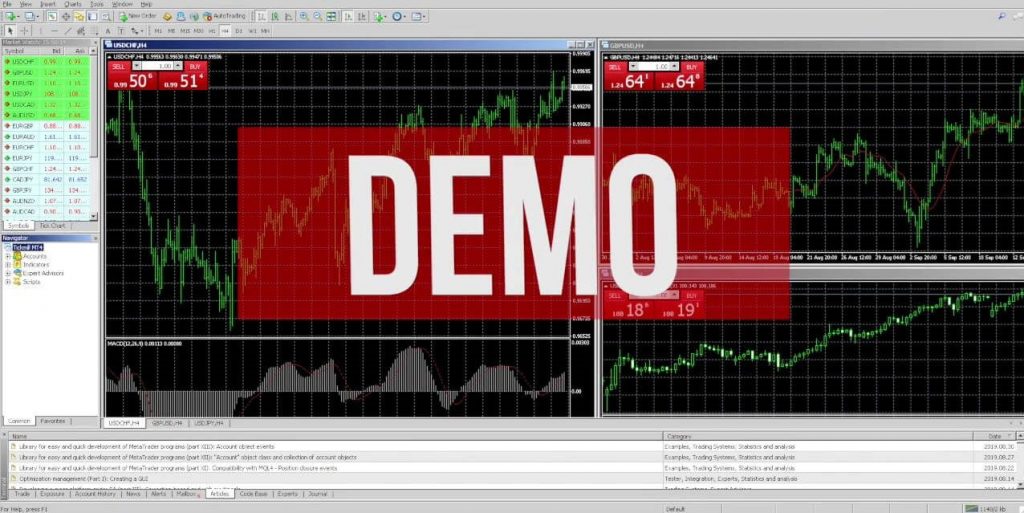
Practising first lets you learn platform operation, test rules, and observe behaviour without capital at stake. Over ten years of doing this, I’ve tested every new approach on a demo balance before committing anything real. The builder’s saying applies: measure twice, cut once.

The qualification. Demo trading is not risk-free in every sense. It removes direct financial loss while failing to reproduce:
- Slippage and requotes
- Realistic spread variation
- Execution speed under load
- Partial fills
- The emotional weight of real capital
That last one matters most. Plenty of people produce excellent simulated results and fall apart within a fortnight of going live. Nothing about the market changed; they did.
So treat simulation as preparation rather than proof, and expect a step down when real money arrives.
Error 9: Trusting Without Verifying
Two versions of this, and both deserve qualification the original article didn’t provide.
Unverified educators: Social media rewards content, not results, so popularity establishes nothing about competence. My earlier phrasing said influencers are content creators rather than traders, which was too absolute; some genuinely trade and some don’t. The actual problem is that you cannot tell from the outside, and expensive cars in a thumbnail are marketing rather than evidence.

Judge an approach on transparent rules, complete results including losses, disclosed risk, and independent testing. Nothing else.
Unverified brokers: Fraudulent operators do exist, typically working the same way: attractive promises, aggressive sales pressure, easy deposits, then obstructed withdrawals. Some offer to trade on your behalf, show early gains, then lose everything or disappear once you add more.
My earlier description of trading as a highly unregulated market was too broad, though. Rules and protections vary by jurisdiction, product, entity, and client classification. Some products are heavily regulated; others aren’t.
| Check | What to verify |
| Legal entity | The exact company holding your balance |
| Regulator and licence | Verified on the regulator’s own register |
| Jurisdiction | Which protections actually apply to you |
| Client funds | Segregation and any compensation scheme |
| Costs | Spread, commission, swap, withdrawal, inactivity |
| Execution | Order policy, slippage, restrictions |
| Withdrawals | Process, limits, documentation required |
| Conflicts | Affiliate or introducing arrangements |
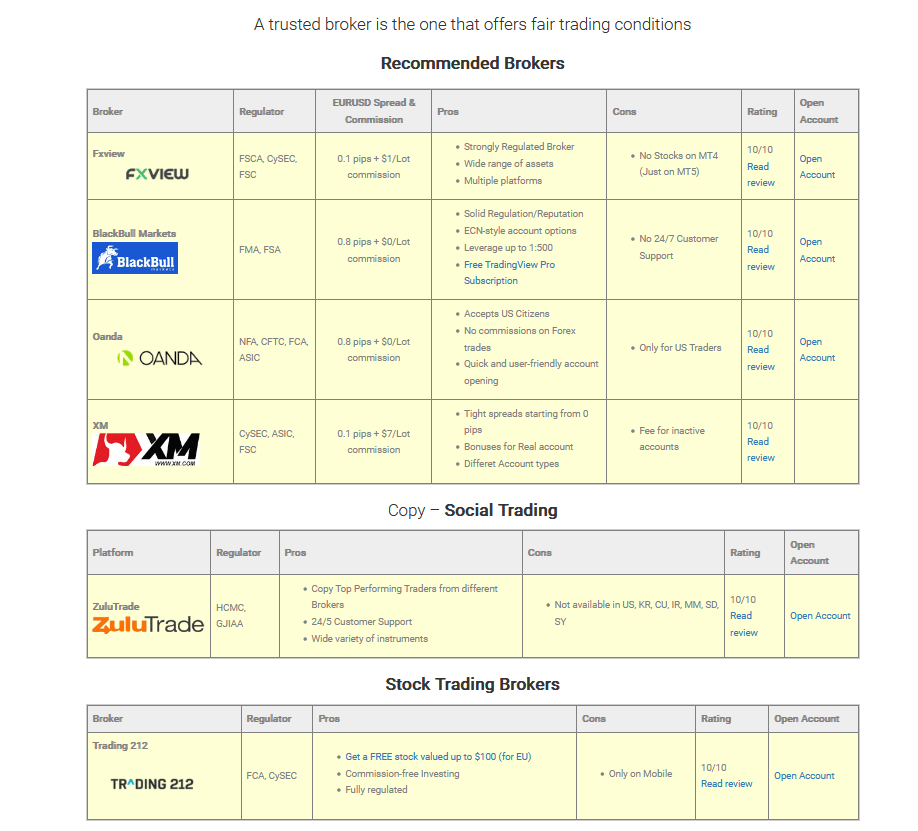
Disclosure: this site maintains a broker page and may hold commercial arrangements with firms listed there. Verify independently rather than relying on any list, including ours.
Error 10: Keeping No Record
Least dramatic, quietly expensive.
Without a written record, repeated mistakes stay invisible. You cannot see that Thursday afternoons produce your worst results, that you deviate from rules after two losses, or that costs consume more than you assumed.
Record for every trade: instrument, direction, entry price, exit, volume, result, and whether you followed your plan. That final column carries the most information. A loss taken correctly is a good outcome. A win taken by breaking your own rules is a problem, because it teaches you discipline is optional.
Look at it weekly, focusing on process rather than profit.
What the Research Actually Shows
Worth grounding this in something beyond opinion.
A widely cited study of Brazilian equity futures day traders found that among individuals who persisted beyond 300 days, roughly 97% lost money, and only a tiny fraction earned more than a minimum wage equivalent. That figure gets quoted loosely across the internet, so the qualifications matter: it covers one market, one instrument type, and specifically those who kept going rather than everyone who tried.
Separately, regulated brokers across Europe publish their own retail loss percentages, typically landing somewhere between 65 and 80 percent of accounts losing money.
Neither figure proves you personally will lose. Both suggest that overconfidence about short-horizon trading is widespread, and that the errors ranked above are common enough to show up in aggregate statistics.
Why Beginners Repeat the Same Errors
Knowing all of this and doing all of this are different problems, which is the part most articles skip.
Every trader I have taught could recite the sizing rule before they broke it. The failure happens under pressure, when a position is running against you and the arithmetic you accepted calmly now feels unnecessarily strict. That gap between knowledge and behaviour is where accounts actually die.
Three things narrow it.
- Make the rule mechanical rather than voluntary: A volume calculated by a spreadsheet before the session cannot be adjusted by mood during it. Platform settings that cap exposure work better than intentions.
- Reduce the number of live decisions: Every judgment call made while money is at stake is an opportunity for the emotional version of you to overrule the planned version. Deciding volume, exit placement, and daily limits in advance leaves fewer openings.
- Accept that day trading amplifies all of this: Shorter horizons mean more decisions per week, more costs, and less time between a loss and the next opportunity to compound it. Slower approaches forgive lapses in discipline that faster ones punish immediately.
There’s also a quieter factor: nobody discusses their losses. The visible portion of trading online skews heavily toward wins, which makes ordinary drawdowns feel like personal failure rather than the normal cost of participating. That distortion pushes people toward exactly the recovery behaviour ranked fourth above.
I’d add one uncomfortable observation from a decade of teaching. The traders who improve fastest are usually those who lost a small amount early and took it seriously. Those who won early tend to attribute it to skill, size up, and discover the arithmetic later at greater expense.
A Beginner Risk Framework
Everything above condenses into a small number of rules.
| Rule | Starting point |
| Fraction at stake per trade | 1% or less |
| Total simultaneous exposure | 2% across everything open |
| Daily loss ceiling | 3%, then stop |
| Maximum trades daily | 3 to 5 |
| Correlated instruments | Treat as one exposure |
| Exit placement | Always set at the open, never widened |
| Volume | Calculated, never estimated |
| Weekly review | Process first, results second |
These are starting points rather than validated standards. Adjust them to your own circumstances, write them down, and treat deviations as errors even when they work out.
What Education Can and Cannot Do
The original article claimed that education, broker selection, testing, and practice make success exponentially more likely. No evidence supported that, and the word “exponentially” was doing work it hadn’t earned.
Here’s the more careful version. Study helps you understand how markets function, what influences price, how to read charts if you’re trading manually, how to think about exposure, and how to recognise fraud. Those things reduce avoidable errors and improve decision quality.
None of them guarantee profitability. Some well-educated people lose money consistently, usually by making the sizing and discipline errors ranked one through four while knowing perfectly well that they shouldn’t.
Free material is abundant: videos, articles, forums, broker education sections. The constraint is rarely access. It’s whether reading translates into behaviour when a position is running against you.
Frequently Asked Questions
How much capital should a beginner start with?
Enough that minimum volumes represent a small fraction of the balance, which usually means several hundred at absolute minimum for micro lots and considerably more for comfort. Accounts too small force sizing that puts large percentages at stake on ordinary moves, making disciplined exposure impossible from the start. Treat the first year as tuition rather than income, and commit only funds whose complete loss would not affect your circumstances materially.
Is automated execution safer for beginners?
Not inherently. Software removes hesitation and emotional interference during execution, which genuinely helps with several errors ranked above, particularly revenge entries and widened exits. It introduces different problems: coding errors, connection failures, and systems that keep operating when conditions have changed. Somebody who cannot assess whether an approach makes sense also cannot tell whether a poor stretch is normal variance or a broken system, which leaves them worse positioned than a manual trader would be.
How long before I should expect consistency?
Longer than most marketing suggests, and the honest answer is that many people never reach it. Judging progress requires enough trades for results to mean something, which takes months for active approaches and considerably longer for slower ones. Watch process adherence rather than profit during the early period, since following your rules is measurable immediately while an edge takes far longer to demonstrate. Anyone promising consistency within weeks is describing marketing rather than trading.
Should I trade during major news releases?
Beginners generally shouldn’t. Scheduled announcements produce sudden gaps where orders fill well away from expectation, spreads widen dramatically, and protective levels get jumped rather than triggered. Experienced traders sometimes target these conditions deliberately with approaches built for them, which is a different activity requiring separate testing. The simplest approach is closing beforehand or reducing exposure, and checking an economic calendar at the start of each session takes about a minute.
What if I’ve already lost a significant amount?
Stop trading temporarily, which sounds obvious and is rarely done. Continuing while attempting recovery is the single most reliable way to convert a bad month into a closed account, since the psychological state that follows large losses produces exactly the errors ranked three and four. Review your records to identify which specific behaviours caused the damage. Return only with reduced volume, and only after establishing that you can follow rules on a demo account again.
Do professional traders make these errors too?
Yes, though usually less often and with better containment. What separates experienced participants is rarely superior analysis; it’s that structural limits catch errors before they compound. Institutional desks impose exposure caps and loss limits externally, which retail traders must impose on themselves. I still catch myself wanting to hold something past its exit occasionally, roughly a decade in, and the rule holds because it’s a rule rather than because the temptation disappeared.
Is a trading plan really necessary?
Yes, and it needn’t be long. One page covering which instruments you trade, during which hours, using which setup, at what exposure, with what daily limits, and when you review. The value isn’t in the document; it’s in having decided everything in advance, so that decisions during a losing session are recalled rather than invented. Plans made under pressure reflect hope. Plans made calmly reflect arithmetic.
Can I recover a badly damaged balance by trading larger?
No, and the arithmetic explains why. Larger volumes increase both the pace of recovery and the pace of further loss, while the psychological pressure of needing a specific outcome degrades decision quality precisely when it matters. Recovery from a 50% loss requires a 100% gain regardless of how you attempt it. Reducing exposure and rebuilding slowly is unsatisfying and considerably more likely to work than the alternative.
Disclosure: The publisher sells trading education and automated systems, and broker links elsewhere on this site may carry commercial arrangements. Content here is educational and does not constitute personalized advice. Consider guidance from a regulated professional before committing capital.

Petko Aleksandrov