 Petko Aleksandrov
Learning algorithmic trading properly takes longer than most people expect, and the path looks different depending on where you are starting from. Some people want to understand the basics before committing to a specific platform or tool. Others already have trading experience and want to learn MQL programming so they can build their own expert advisors. A few are ready to think seriously about portfolio construction and running multiple automated strategies at once.
The courses on this list cover all of those stages. They range from completely free to paid, from beginner-friendly to technically demanding. Each one was selected because it teaches something genuinely useful, from a source with real credibility in the algorithmic trading space.
The best algorithmic trading courses in 2026 range from free beginner introductions covering strategy concepts and trading platforms, to advanced MQL5 programming courses for building custom expert advisors, to technical indicator and strategy courses from specialist developers. The right starting point depends on your current knowledge level, your financial goals, and how deeply you want to get into the technical side of automation.
One thing I want to be clear about before we get into the picks: no course, however good, removes the risk that comes with trading. Algorithmic trading education gives you a foundation for making better decisions. What you do with that foundation in live markets is still your responsibility.
Quick Comparison: Best Algorithmic Trading Courses
| Course | Provider | Level | Price | Focus Area | Platform |
| Algo Trading for Beginners | Algo Trading Space | Beginner | Free | Concepts, strategy basics, EA introduction | MetaTrader |
| MQL5 Programming Course | Rene Balke | Intermediate to Advanced | Paid | MQL5 coding, custom EA development | MetaTrader 5 |
| S/R Indicator and Trading Course | Responsible Forex Trading | Intermediate | Paid | Technical indicators, strategy building | MetaTrader |
| Algo Trading Blueprint: Portfolio EAs | Algo Trading Space | Intermediate to Advanced | Paid | Portfolio construction, multi-EA management | MetaTrader |
1. Algo Trading for Beginners (Free)
Who It Is For
This is the course I would point anyone to who is just starting to think seriously about automated trading. It does not assume prior programming knowledge, familiarity with MetaTrader, or experience running expert advisors. It starts from zero and builds up from there.
The course is available for free through the Algo Trading Space academy, which makes the entry point essentially risk-free. There is no financial commitment required to find out whether algorithmic trading is something worth pursuing further.
What You Will Learn
- The core concepts behind algorithmic trading and how automated strategies work
- How to set up a trading platform and connect an expert advisor
- Introduction to backtesting and why historical testing matters before going live
- Basic risk management principles applied to automated trading strategies
- How to evaluate an EA’s track record and what performance metrics actually mean
Why It Makes This List
Free courses are often watered-down versions of paid content, designed to generate upgrades rather than deliver real value. This one is different. It covers enough ground to give a genuine foundation, and the Algo Trading Space team actively runs live accounts and publishes real performance data, which means the content is grounded in practical experience rather than theoretical concepts.
Pros
- Completely free with no hidden upgrade requirements to access core content
- Beginner-accessible with no programming or finance background required
- Produced by a team with documented live trading experience
- Practical focus on real tools and platforms rather than abstract theory
Cons
- Does not cover MQL programming or custom EA development
- Suitable as a starting point, but will need to be followed by more technical courses for deeper development
- Limited depth on advanced portfolio management concepts
2. MQL5 Programming Course by Rene Balke
Who It Is For
If you have decided that algorithmic trading is genuinely something you want to pursue, and you want to build your own expert advisors rather than relying entirely on third-party systems, learning MQL5 is the next logical step. This is the programming language that MetaTrader 5 uses, and it is specifically designed for creating trading algorithms, indicators, and automated strategies.
Rene Balke’s course is the most technically demanding on this list. It is not for complete beginners, and I would not recommend starting here without some familiarity with trading concepts first. But for traders who are ready to move beyond using other people’s EAs and start creating their own, this is perhaps the most valuable investment available in the algo trading education space.
What You Will Learn
- MQL5 syntax and programming fundamentals applied specifically to financial trading
- How to build expert advisors from scratch, including entry logic, exit conditions, and risk parameters
- Creating custom indicators and integrating them into trading algorithms
- Backtesting your own strategies within the MetaTrader 5 environment
- Understanding how to structure code for reliability and performance in live trading conditions
Why It Makes This List
Most MQL programming courses available on platforms like Udemy or Coursera teach generic programming concepts and then try to apply them to trading as an afterthought. Rene Balke’s course is built specifically around MetaTrader 5 and the practical requirements of building trading algorithms that work in real conditions. The depth of coverage is considerably more useful for traders who actually want to deploy what they build.
Pros
- Purpose-built for MetaTrader 5 rather than generic programming education
- Covers the full development cycle from concept to deployable expert advisor
- Taught by someone with practical experience in algorithmic strategy development
- Directly applicable skills; what you learn can be put to use immediately in the platform you are already using
Cons
- Requires some baseline trading knowledge to get full value from the content
- More technically demanding than the other courses on this list
- Python programming and machine learning-based strategies are outside this course’s scope; it focuses specifically on MQL5
3. S/R Indicator and Trading Course by Responsible Forex Trading
Who It Is For
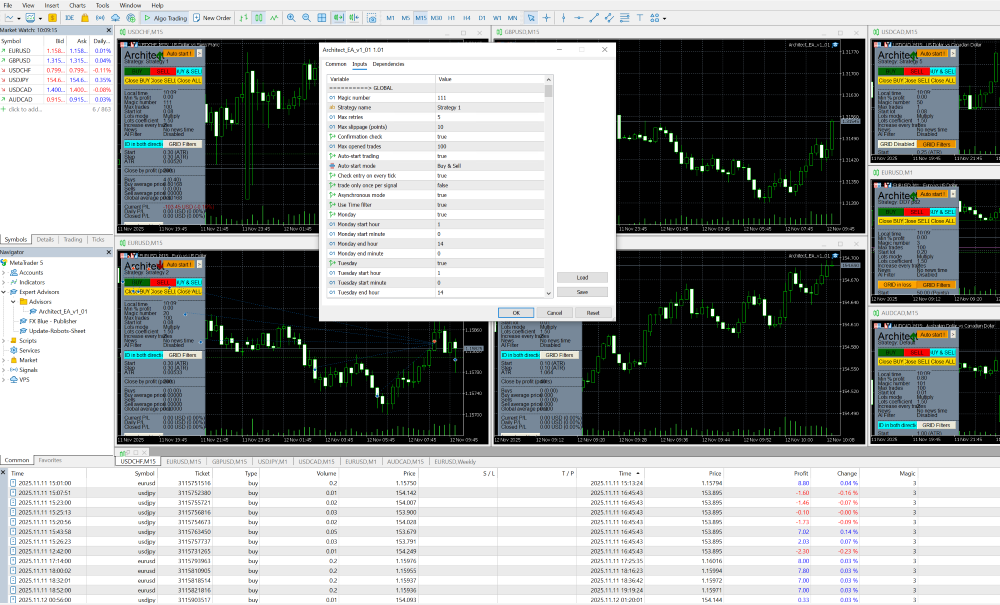
Responsible Forex Trading is the vendor behind Architect Algo and several other systems that the Algo Trading Space team has reviewed and tested. Their S/R Indicator and Trading Course teaches traders how to use support and resistance analysis systematically, combined with their proprietary indicator tools, to build and apply trading strategies.
This course sits in an interesting position. It is not purely an EA course, and it is not purely a programming course. It bridges the gap between manual trading methodology and the kind of systematic thinking that translates well into automated strategy development. Traders who want to understand why a strategy works before automating it will find this more useful than jumping straight into code.
What You Will Learn
- How to identify meaningful support and resistance levels rather than arbitrarily drawn lines
- Using proprietary indicator tools to confirm level quality and trade signals
- Developing rule-based trading strategies from technical analysis principles
- Applying systematic thinking to strategy construction in a way that can be backtested and automated
- Understanding how the Responsible Forex Trading approach works across different forex pairs and timeframes
Why It Makes This List
The most popular forex expert advisors are often built on strategies that traders could understand if they took the time to learn the underlying logic. Responsible Forex Trading’s course teaches that logic directly, which I think makes you a better EA user even if you never write a line of MQL code. Knowing what a strategy is supposed to do makes it easier to recognize when conditions are favorable and when they are not.
Pros
- Bridges manual trading knowledge and systematic strategy development
- Proprietary indicator tools add practical value beyond theoretical concepts
- Produced by the same vendor behind Architect Algo and the Powerhouse strategy suite
- Builds foundational analysis skills that improve decision-making across all trading styles
Cons
- More suitable for traders with some existing forex background than complete beginners
- Indicator tools are specific to the Responsible Forex Trading ecosystem
- Does not cover MQL programming or EA development directly
Bonus: Algo Trading Blueprint: Portfolio Expert Advisors
Who It Is For
This is the course I would recommend for traders who are past the beginner stage, have some experience running expert advisors, and want to think more seriously about building a diversified algorithmic portfolio rather than relying on a single strategy.
Managing multiple EAs across different pairs, timeframes, and strategy types is meaningfully more complex than running one system, and getting the portfolio construction right matters enormously for long-term results.
What You Will Learn
- How to select and combine multiple expert advisors for portfolio-level diversification
- Understanding correlation between strategies and why it matters for overall account risk
- Position sizing and risk allocation across multiple simultaneous trading algorithms
- Monitoring a portfolio of EAs and deciding when to add, remove, or adjust systems
- Practical frameworks for managing an automated portfolio on a live account
Why It Makes This List
Most algo trading education focuses on individual strategies. The portfolio perspective is less commonly taught, and it is arguably more important for serious traders. Running three or four EAs without understanding how their drawdowns interact, or whether their strategies are correlated, can produce worse outcomes than running a single well-chosen system. This course addresses that gap directly.
Pros
- Fills a genuine educational gap; portfolio-level EA management is rarely covered in other courses
- Practical frameworks applicable immediately to real account management
- Produced by the Algo Trading Space team, which actively runs live portfolio accounts
- Relevant to both beginners adding their second EA and experienced traders building more structured portfolios
Cons
- More valuable after gaining some experience with individual EAs first
- Assumes basic familiarity with algorithmic trading concepts covered in the beginner course
What to Consider Before Choosing an Algorithmic Trading Course
Choosing between courses is not just about price or level. A few questions worth asking before committing:
What is your actual goal?
Someone who wants to run existing expert advisors more effectively needs different education from someone who wants to build custom trading algorithms from scratch. The free beginner course and portfolio course suit the first group. The MQL5 programming course suits the second.
How much technical background do you have?
Python programming and machine learning-based strategies are increasingly discussed in algorithmic trading, particularly on platforms like Coursera and Udemy. Those approaches require a different skill set from MetaTrader-based EA development. The courses on this list focus specifically on the MetaTrader ecosystem, which is where most retail algorithmic traders actually operate.
Are you looking for certifications or practical skills?
Certifications like EPAT from QuantInsti have value in certain professional contexts, particularly for traders pursuing careers in quantitative finance or at institutions using platforms like Interactive Brokers. For individual retail traders whose goal is running automated strategies on personal accounts, practical skills and real-world application matter more than credentials.
What trading platforms are you using?
All four courses on this list are built around MetaTrader, which remains the most widely used platform for retail algorithmic trading. If you are already using or planning to use MetaTrader 4 or MetaTrader 5, the alignment is direct. Other platforms have their own ecosystems and learning paths.
How the Algo Trading Space Academy Fits Into Your Learning Path
The Algo Trading Space team tests expert advisors on live accounts, publishes real performance data, and produces educational content based on what actually works in practice rather than what looks good in theory. The academy courses reflect that approach; they are built around real tools, real platforms, and real trading experience.
For traders who want to go further than the courses alone, the Algo Trading Space VIP club provides access to live trading results across active accounts, early insights on new systems being tested, and priority support from the team. It is a useful complement to the educational content, particularly for traders who learn best by seeing how strategies perform in real conditions rather than studying concepts in isolation.
Frequently Asked Questions
What are the best algorithmic trading courses for beginners in 2026?
The best starting point for beginners is the free Algo Trading for Beginners course from Algo Trading Space, which covers the core concepts of algorithmic trading, MetaTrader setup, backtesting basics, and EA evaluation without requiring programming knowledge or prior trading experience.
For those ready to move further, the MQL5 Programming Course by Rene Balke covers custom expert advisor development in MetaTrader 5, and the Algo Trading Blueprint portfolio course addresses multi-EA management for more experienced traders.
Do I need to know Python to learn algorithmic trading?
Python programming is valuable for quantitative finance careers and for developing machine learning-based trading algorithms, but it is not required for MetaTrader-based algorithmic trading. MetaTrader uses MQL4 and MQL5 as its native programming languages, and most retail algorithmic traders learn MQL rather than Python.
Platforms like Coursera and Udemy offer Python-based finance courses, but for traders focused on running expert advisors on MetaTrader, MQL5 skills are more directly applicable to their actual trading platform.
How long does it take to learn algorithmic trading?
The timeline depends on your starting point and goals. The free beginner course can be completed in a few hours and provides a working foundation within days of starting. Learning MQL5 programming to a functional level typically takes several weeks of consistent study and practice.
Building, backtesting, and running a portfolio of automated strategies effectively is a months-long process that continues to develop through live trading experience. There is no fixed endpoint; most serious algorithmic traders continue learning throughout their trading career.
Is algorithmic trading profitable for individual traders?
Algorithmic trading can be profitable for individual traders, but results vary significantly based on strategy quality, risk management, broker conditions, and market environment. The Algo Trading Space team publishes live account results showing realistic monthly returns in the range of 1 to 3% at conservative risk settings, which is very different from the high-return claims common in EA marketing.
Education in strategy selection, backtesting, and portfolio management improves the probability of positive outcomes, but does not eliminate trading risk.
What is the difference between MQL4 and MQL5 for algorithmic trading?
MQL4 is the programming language for MetaTrader 4, while MQL5 is used for MetaTrader 5. MQL5 is more powerful and supports more complex strategy development, including multi-symbol testing and more advanced data handling. Most new EA development happens in MQL5 as MetaTrader 5 adoption continues to grow. However, a large number of existing expert advisors are still built in MQL4.
The Rene Balke MQL5 Programming Course focuses specifically on MetaTrader 5, which is the recommended platform for new algorithmic trading development.
Are there free algorithmic trading courses worth taking?
Yes, the Algo Trading for Beginners course from Algo Trading Space is genuinely free and covers enough foundational content to give a real starting point for new traders. Many free courses on platforms like Udemy or Coursera provide introductory content but require paid upgrades for the more useful material.
The Algo Trading Space free course does not follow that model; it is designed to stand on its own as a practical introduction. For deeper technical skills, paid courses like the MQL5 Programming Course provide value that free resources typically cannot match.