 Petko Aleksandrov
Risk note. Trading leveraged products carries substantial risk to your capital. Practising on a virtual account first costs nothing and teaches you the software before any money is exposed.
The Quick Answer
On Windows, you get the MetaTrader 4 setup file from your broker, install it, approve the security prompt, and sign in. Five minutes, give or take.
On a Mac, there is no native build. Apple never got one, because MetaQuotes wrote the program as a Windows application and stopped adding features to it back in 2015. What brokers distribute for Apple machines is a wrapper: a .dmg or .pkg containing the Windows software plus a compatibility layer built on Wine, which quietly creates a small virtual drive in your Library folder and runs the real thing inside it.
Both download routes are covered below, along with the broker checklist, server selection, connection errors, and the awkward question of whether MT4 is still worth choosing in 2026.
One thing to fix immediately: the earlier version of this guide told readers to install PlayOnMac, XQuartz, and Wine 1.4.1 by hand. That advice is obsolete and following it now would waste an afternoon. Brokers package all of it for you.
Windows Against Apple: What Actually Differs
| Feature | Windows | Apple machines |
| Method | Direct broker setup file | Broker package wrapping Wine |
| Complexity | Low | Moderate |
| Native build | Yes | No, and there never was one |
| Expert Advisor compatibility | Straightforward | Usually fine, less reliable for EAs calling external DLLs |
| Typical problems | Permissions, firewall, wrong server | Security prompts, sleep interruptions, Rosetta requirements |
| Best starting point | Your broker’s Windows setup file | Your broker’s documented Apple instructions |
Worth saying plainly: if you intend to leave an Expert Advisor working unattended, a Mac is the harder route. Compatibility-layer setups stop when the machine sleeps, which is fine for chart watching and genuinely unhelpful for automation.
Before You Start
Three things need settling first.
- A broker: Thousands exist, some regulated, some not, some outright fraudulent. Since MetaQuotes stopped issuing new MetaTrader 4 licences years ago, no fresh broker can spin up an MT4 server, so anyone offering it has been around a while. That filters out some risk, though not much.
- A demo account: Registration is free to complete, takes minutes, and the trading platform itself costs nothing. Brokers make money on spreads and commissions, not on the download itself.
- Your machine’s specifics: Windows version, or on the Apple side, whether the processor is Intel or Apple Silicon and which system version you are running.
Broker Checklist
| Check | What to verify |
| Regulation | Legal entity, regulator, licence number, jurisdiction |
| Genuine MT4 | An actual MT4 build, not MT5 relabelled |
| Accounts | Both demo and live availability |
| Costs | Spread, commission, swap, inactivity charges |
| Instruments | The symbols you actually intend to trade |
| Execution | Market execution and slippage policy |
| Automation | Whether Expert Advisors are permitted |
| Withdrawals | Methods, fees, limits, processing times |
Spreads and commissions matter more than beginners expect when trading automated strategies, since an algorithm firing dozens of orders pays those costs dozens of times.
There is also a forum thread at EA Forex Academy covering how to recognize scam brokers, built partly from stories readers sent in. Five minutes reading it is a decent investment if this is your first account.
Where to Get the File Safely
Order of preference, and the order matters:
- Your broker’s website or client portal: This is the correct source, essentially always.
- The registration email: Most brokers email a direct download after you open a virtual account.
- Nowhere else: Third-party mirrors hosting trading software are a recognized malware vector, and a tampered build sits between you and your money.
The MetaQuotes site will not help you here. Try downloading MT4 from mql4.com and you get pushed toward MT5 instead, because the company would prefer everyone moved across. Most traders, myself included, still prefer the older one.
Before opening whatever lands in your Downloads folder, check two things. The publisher name on the file properties, and whether the file size looks plausible. A genuine setup file is tens of megabytes, not two.
Setting Up on Windows
- Confirm your broker actually offers MT4 rather than MT5 only.
- Fetch the MetaTrader 4 setup file from the broker portal or your registration email.
- Look in your Downloads folder and check the publisher before opening anything.
- Double-click the file. Microsoft Windows will show a security prompt asking for administrator permission, which is normal.
- Read the terms, then continue through the setup screens. The default folder suits almost everyone.
- Finish. A browser window may open at the MQL5 site automatically, which you can close.
- Launch MT4 from the desktop shortcut.
- Pick your broker’s server from the list.
- Sign in with an existing account, or open a demo directly from the login dialog.
- Watch for quotes moving in Market Watch before trusting anything.
Requirements are modest. Windows 10 and Windows 11 both handle MT4 comfortably, and the software was written for far weaker hardware than anything sold today.
Setting Up on an Apple Machine
- Read your broker’s own Apple instructions first. They vary, and theirs override mine.
- Identify your processor: Apple menu, then About This Mac.
- Download the .dmg or .pkg package from the broker.
- Open it and drag MetaTrader 4 into Applications.
- First launch will be blocked, because the package is not from the App Store. Right-click the icon, choose Open, then confirm. That path works where double-clicking fails.
- Accept the Wine component prompts when they appear. Mono and Gecko are both needed, and declining them leaves you with software that opens and then misbehaves.
- Select your broker’s server, then sign in to the demo.
- Test charts and any indicators before considering live funds.
Version requirements differ between brokers. Some state macOS Catalina 10.15.7 or later, others require Big Sur 11 or later, so check the broker’s page rather than trusting a general figure from any guide including this one.
Intel Against Apple Silicon
Both work. Neither works natively.
M-series machines run MT4 through Rosetta 2 underneath the Wine layer, which sounds like it should be slow and generally isn’t for a charting application. Order execution latency comes from your connection and your broker, not from translation overhead.
Where the difference bites is stability under load. Multiple charts, several Expert Advisors, and an overnight session tend to be where wrapped setups show their seams. Traders running automation seriously often end up putting MT4 on a Windows virtual private server and connecting from the Mac by remote desktop, which sidesteps the compatibility question entirely.
Alternatives worth knowing about:
- Virtual machine. Parallels or VMware Fusion running Windows on ARM. Heavier to install, though you get genuine Windows.
- Windows VPS. Runs continuously, survives your laptop sleeping, costs a monthly fee.
- Browser version. No setup at all, though indicator and EA options are limited.
Demo Accounts and Server Selection
Server choice trips up more beginners than anything else. Each broker operates several, often named for account type or region, and picking the wrong one produces a login failure that looks identical to a wrong password.
Your account details, arriving by email, state which server to use. Match it exactly.
Opening a demo from inside the software takes a minute: File, then Open an Account, choose the server, fill in the form, and note the login number and password that appear. My standing advice to students has always been the same. Test everything on virtual money first, whatever the strategy, until the results and your own comfort level both hold up.
Confirming It Actually Connected
Look at the bottom right corner. Numbers moving with a green or blue bar means data is arriving. A red bar reading “No connection” means it isn’t.
Prices ticking in Market Watch confirm the same thing more visibly. If the window looks empty, right-click inside it and choose Show All, which reveals every symbol your broker offers rather than the small default selection.
Charts open by default on a handful of instruments. Drag any symbol from Market Watch onto a chart to replace them.
Turning On Expert Advisors
Automated strategies stay disabled until you allow them.
- Tools, then Options, then the Expert Advisors tab.
- Tick the box permitting automated trading.
- Confirm the toolbar button shows automation as active.
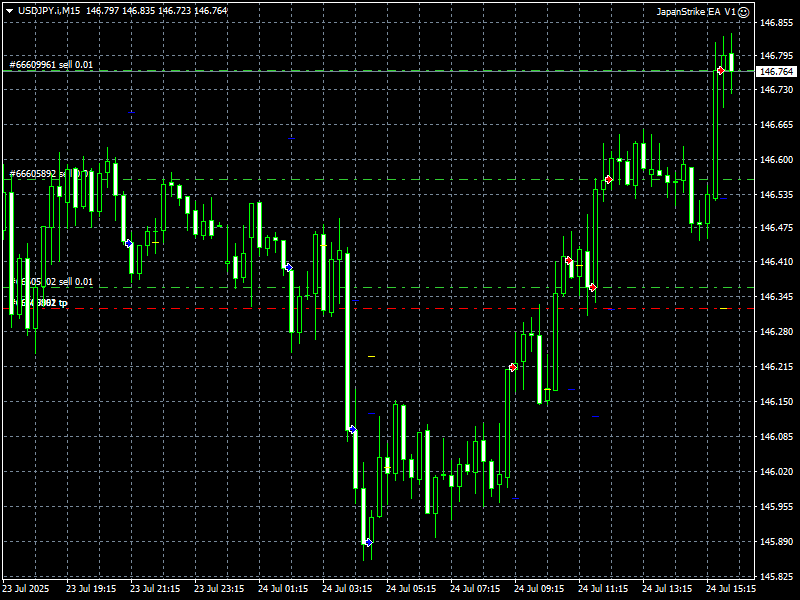
- A smiling face in the chart corner means the attached EA is working; a frowning one means it isn’t.
Strategy files belong in the MQL4 folder, reachable through File, then Open Data Folder. Restart afterwards, or refresh the Navigator panel.
Common Problems
Windows
| Symptom | Likely cause |
| Cannot install | Administrator rights missing, or antivirus quarantine |
| Cannot connect | Firewall blocking the executable |
| Invalid account | Wrong server selected, not wrong password |
| Missing symbols | Default Market Watch view rather than Show All |
| Automation ignored | Algorithmic trading not enabled in Options |
Apple machines
| Symptom | Likely cause |
| Blocked on first launch | Gatekeeper, resolved by right-click then Open |
| Odd rendering or crashes | Compatibility components declined during setup |
| Stops overnight | Machine slept, taking the compatibility layer with it |
| EA fails silently | External DLL dependency the wrapper cannot satisfy |
| Nothing after upgrading | System update broke the environment, so install the package again |
That last row deserves emphasis. Apple system updates can break these wrapped setups without warning, so avoid upgrading mid-week if positions are open.
MT4 or MT5 in 2026?
Awkward question, and the honest answer has changed since 2020.
MetaQuotes ended MT4 development in 2015 and stopped selling licences to new brokers, issuing only security and bug fixes since. No new servers, no new features. The ecosystem around it remains enormous, thousands of indicators and Expert Advisors still target MQL4, and plenty of established brokers continue supporting it fully.
So MetaTrader 4 works, and will keep working for some years yet, though the direction of travel is obvious. Anyone starting from scratch today, with no existing strategy library, might reasonably choose MT5 instead. Anyone with a shelf full of MQL4 code has every reason to stay put. I still prefer the older one, which is partly familiarity and partly that it does what I need.
Frequently Asked Questions
Is MetaTrader 4 free?
Yes, entirely. Brokers distribute the trading platform at no cost, virtual accounts cost nothing to open, and there is no licence fee for traders. Revenue comes from spreads, commissions, and overnight financing on positions you actually take. Be cautious of any site charging for the setup file itself, since that is a reliable sign of an unofficial source. The mobile and browser versions are free too, though feature sets differ between them.
Can I use the same account on several computers?
Yes. Your login number, password, and server work from any machine with MT4, so a desktop and a laptop can both connect to one account. Charts, templates, and Expert Advisors do not sync automatically, since those live in local folders. Simultaneous sessions are permitted by most brokers, though changing the password from one machine disconnects the other until you sign in again with the new credentials.
Where does MetaTrader 4 store my data?
Everything sits in the data folder, reachable from the File menu inside the software. Windows keeps it under AppData, while Apple machines place it inside the virtual drive the wrapper creates in your Library. Subfolders hold Expert Advisors, indicators, scripts, templates, and logs. Back that folder up before any major system upgrade, because reinstalling gives you a clean environment with none of your custom work in it.
How do I remove MetaTrader 4 completely?
On Windows, uninstall through Settings and Apps, then delete the leftover data folder manually, since the uninstaller usually leaves it behind. On Apple machines, drag the application to Trash and remove the associated virtual drive from your Library folder. Check for orphaned broker folders afterward, as traders with several accounts often accumulate multiple copies. Save any custom indicators or strategies elsewhere first, because deletion is permanent.
Does MetaTrader only offer CFD trading?
Not universally, and the earlier version of this page overstated it. Many retail brokers do offer forex and CFD products through MT4, meaning you trade price movement rather than owning the underlying asset. Available instruments, contract types, leverage limits, and investor protections all depend on the broker and the jurisdiction regulating it. Some brokers connect the software to different product structures entirely, so read your account documentation rather than assuming.
What if my broker offers MT5 only?
Then MT4 is not available to you, and no workaround exists, because the software connects only to servers licensed for it. Since MetaQuotes stopped issuing MT4 licences to new brokers, newer firms cannot offer it regardless of demand. Your options are choosing an established broker that still maintains MT4 infrastructure, or adapting to MT5. Converting MQL4 strategies to MQL5 is possible but rarely trivial, so factor that effort into the decision.
Do I need to keep my computer on for Expert Advisors to work?
Yes, and this catches people out constantly. Strategies execute from your local machine, so a closed laptop, a sleeping display, or a dropped connection means no orders are placed and open positions go unmanaged. A virtual private server solves it by hosting the software on a machine that never sleeps, typically located near your broker’s execution servers. Many brokers offer free hosting once account balance passes a threshold.
Disclosure: Educational content only, not a recommendation to trade or to use any particular broker. Verify current requirements against your broker’s own documentation before setting anything up, since platform support changes without notice.