 Petko Aleksandrov
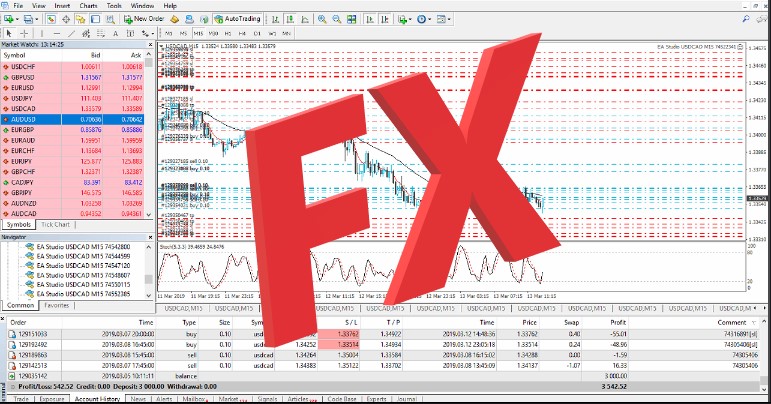
FX stands for foreign exchange. In finance and trading, FX most commonly refers to the foreign exchange market, where currencies are bought and sold against each other. FX and forex are often used interchangeably, though “FX” tends to be the preferred abbreviation in institutional and banking contexts, while “forex” is more common in retail trading education and online communities.
That is the short answer. But the term FX shows up in a range of contexts beyond currency trading, so it is worth understanding what it means in each one.

What FX Means: Core Definitions
| Term | Meaning | Common Use |
| FX | Foreign exchange | Short abbreviation for currency exchange and the currency market |
| Forex | Foreign exchange | Common retail trading term for the currency market |
| FX market | Foreign exchange market | Global decentralized market where currencies are traded |
| FX rate | Foreign exchange rate | Price of one currency relative to another |
| FX broker | Foreign exchange broker | Broker providing access to currency pair trading |
| FX trading | Foreign exchange trading | Buying and selling currency pairs |
| Exchange transactions | Currency exchange transactions | Converting one currency into another for any purpose |
| Exchange risk | Foreign exchange risk | Risk of loss from currency rate movements |
FX vs Forex: Is There a Difference?
This trips people up more than you might expect. FX and forex refer to the same underlying market; the distinction is largely stylistic and context-dependent.
FX is the abbreviation. Banks, institutional traders, and financial professionals tend to use it because it is shorter and fits naturally into industry shorthand. You will see it in phrases like “FX desk,” “FX hedging,” and “FX rates.”
Forex is a blended word formed from “foreign exchange.” It became the common term in retail trading circles, particularly online, because it reads naturally as a noun: “the forex market,” “trading forex,” “forex broker.”
Both mean the same thing in practice. If someone asks whether you trade FX or forex, the answer can be either; the market is identical. I have seen both used in the same sentence without anyone batting an eye, which is perhaps the best proof that the distinction is mostly cosmetic.
What Is the FX Market?
The foreign exchange market is the global market where currencies are traded against each other. According to the Bank for International Settlements (BIS) Triennial Central Bank Survey, the FX market is the largest and most liquid financial market in the world by trading volume, with daily turnover measured in trillions of dollars.
A few characteristics that define the FX market:
- Decentralized structure: unlike stock exchanges, the forex market has no central location. Trading happens over-the-counter (OTC) between banks, institutions, brokers, and retail traders connected electronically
- Currency pairs: currencies trade in pairs; you buy one currency while selling another. EUR/USD, GBP/USD, and USD/JPY are among the most traded pairs globally
- 24-hour operation: the FX market operates across global sessions, from Sydney through Tokyo, London, and New York, running continuously five days a week
- Participants: central banks, commercial banks, hedge funds, corporations conducting international business, and retail traders through FX brokers
Understanding this structure matters because it explains why exchange rates fluctuate constantly and why liquidity varies across sessions.
FX in Different Contexts
FX is an abbreviation that appears in several fields beyond currency trading. It is worth knowing what it means when encountered outside a trading context.
| Context | What FX Means |
| Finance and trading | Foreign exchange; the currency market |
| Banking | Foreign exchange transactions; converting or hedging currency exposure |
| Visual effects and film | Special effects (SFX is more specific, but FX is used informally) |
| Television | FX is also the name of a US cable television channel |
| Medical | Fragile X syndrome is sometimes abbreviated FrX or FXS, not FX specifically, but the abbreviation occasionally appears in clinical shorthand |
| Technology | Effects in audio production; also used in software naming |
For the purposes of this guide, FX means foreign exchange throughout.
FX Rates: How Currency Exchange Works
An FX rate is simply the price of one currency expressed in another. If the EUR/USD rate is 1.08, one euro buys 1.08 US dollars. The rate changes continuously based on supply and demand in the market, influenced by interest rates, inflation, economic data, and geopolitical events.
Exchange rates matter to more than just traders:
- Businesses with international operations face exchange risk when revenues in one currency need to be converted back to another
- Travelers encounter FX rates when converting cash at airports or using cards abroad
- Importers and exporters see their costs and revenues affected by rate movements
- Investors holding assets in foreign currencies have returns affected by exchange rate changes
Central banks including the Federal Reserve, the European Central Bank, and the Bank of England publish exchange rate data and educational resources on how FX markets function.
Common FX Trading Terms
If you are new to forex trading, a number of abbreviations and terms appear regularly. Here is a reference for the most common ones:
| Term | Definition |
| Pip | The smallest standard price movement in a currency pair; usually the fourth decimal place |
| Spread | The difference between the buy (ask) price and sell (bid) price |
| Lot | Standard unit of trade size in forex (standard lot = 100,000 units of the base currency) |
| Leverage | Borrowed capital that allows trading larger positions than account balance allows; increases both gains and losses |
| Margin | The deposit required to open a leveraged position |
| Base currency | The first currency in a pair (e.g., EUR in EUR/USD) |
| Quote currency | The second currency in a pair (e.g., USD in EUR/USD) |
| Long | Buying a currency pair, expecting it to rise in value |
| Short | Selling a currency pair, expecting it to fall |
| CFD | Contract for difference; a product that tracks FX rates without exchanging the underlying currencies physically |
| Swap | Overnight interest fee charged or paid for holding a forex position beyond the daily rollover |
Regulators including the FCA, ASIC, CFTC, and ESMA require brokers to disclose the risks associated with leveraged FX products, including CFDs. These disclosures are worth reading before funding a trading account.
Forex Slang: The Unofficial FX Dictionary
Currency markets developed a colorful vocabulary over decades of trader culture. These informal terms are widely used and worth recognizing even if you never use them yourself.
| Slang Term | What It Means | Currency |
| Cable | British pound vs US dollar | GBP/USD |
| Fiber | Euro vs US dollar | EUR/USD |
| Aussie | Australian dollar | AUD/USD |
| Kiwi | New Zealand dollar | NZD/USD |
| Loonie | Canadian dollar | USD/CAD or CAD broadly |
| Swissy | Swiss franc | USD/CHF or CHF broadly |
| Yard | One billion units of currency | Various |
| Pip | Smallest standard price increment | Various |
| Going long | Buying, expecting the price to rise | Various |
| Going short | Selling, expecting a price decline | Various |
The term “Cable” has an interesting origin. According to financial historians, GBP/USD earned the nickname in the 1800s when the exchange rate between London and New York was transmitted via the transatlantic telegraph cable. The name stuck through generations of traders long after the technology changed.
FX in Algorithmic Trading
For traders on this site, FX also appears in the context of automated trading. An “FX EA” or “Forex EA” refers to an Expert Advisor designed to trade currency pairs automatically within MetaTrader. These are coded programs that monitor exchange rate movements and place orders based on predefined rules.

Algorithmic approaches to FX trading are common among retail traders who want to remove emotional decision-making from execution. The currency market’s 24-hour structure makes automated systems particularly practical: a forex EA can trade overnight sessions that a manual trader cannot monitor continuously.
Further Resources
For traders interested in algorithmic FX strategies and documented testing results, Algo Trading Space provides setup configurations at algotradingspace.com/premium. The VIP club gives members access to real trading results, priority support, and early insights on strategies in active development.
Frequently Asked Questions
Does FX mean the same as forex?
Yes. FX and forex both stand for foreign exchange and refer to the same market where currencies are bought and sold. FX is the shorter abbreviation used more commonly in institutional and banking contexts. Forex is a blended term more common in retail trading education and online communities. Both describe the global over-the-counter currency market where trillions of dollars in exchange transactions occur daily, as documented by the Bank for International Settlements in its Triennial Central Bank Survey.
What does FX stand for in banking?
In banking, FX stands for foreign exchange. Banks use FX desks to conduct currency exchange transactions for corporate clients, manage their own currency risk, and facilitate international payments. FX operations in banks include spot transactions (immediate exchange), forward contracts (future exchange at a fixed rate), and FX swaps. Central banks also conduct FX operations to manage currency reserves and, in some cases, to influence exchange rates as part of monetary policy.
What does FX mean in trading?
In trading, FX means foreign exchange and refers to buying and selling currency pairs to profit from exchange rate movements. Retail traders access the FX market through brokers offering platforms like MetaTrader, trading pairs such as EUR/USD, GBP/USD, and USD/JPY. FX trading involves leverage, which increases both potential gains and losses. Regulatory bodies including the FCA, CFTC, ASIC, and ESMA oversee FX brokers and require risk disclosures for retail clients trading leveraged currency products.
Is FX the same as currency exchange?
FX is the broader term that covers both the financial trading market and currency exchange transactions. Currency exchange typically refers to the practical conversion of one currency into another, such as converting dollars to euros before a trip abroad. FX trading involves speculating on exchange rate movements rather than converting physical currency for use. Both fall under the definition of foreign exchange, but the context and purpose are different: currency exchange is transactional, while FX trading is speculative.
What is an FX rate?
An FX rate is the price of one currency expressed in terms of another. For example, an EUR/USD rate of 1.08 means one euro buys 1.08 US dollars. Exchange rates change continuously based on supply and demand, driven by factors including interest rate decisions from central banks like the Federal Reserve and ECB, inflation data, economic growth figures, and geopolitical developments. FX rates are published continuously by banks, brokers, and financial data providers during market hours.
Why is GBP/USD called Cable?
GBP/USD is nicknamed Cable because of its connection to the transatlantic telegraph cable laid between London and New York in the 1800s. Exchange rate information between the two financial centers was transmitted via this cable, and traders began calling the GBP/USD rate “the cable” as a shorthand. The nickname has persisted through generations of market participants despite the technology changing completely. Cable is one of the most recognized pieces of forex slang and is still in common use among professional and retail FX traders today.
Further Reading
- How To Trade Forex From Home
- How To Trade Forex For Beginners
- Best Forex Strategies
- Forex Indicators
- Best Currency Pairs To Trade
- How To Create A Forex Trading Without Coding
- Best Forex Brokers
- Best Forex Robots For Trading
- What Is A Magic Number In Forex
- Best Forex VPS For MetaTrader
- What Is Forex Algorithmic Trading
- How To Become A Successful Forex Trader