 Petko Aleksandrov
Educational content, not financial advice. Product structure and leverage limits vary by jurisdiction and broker entity, so confirm the details with your own provider before trading.
In forex, buying a currency pair means buying the first currency and selling the second one at the same time. Selling the pair means the reverse: you’re selling the first currency and buying the second. For EUR/USD specifically, a buy position profits if EUR strengthens relative to USD, and a sell position profits if EUR weakens relative to USD. A buy opens at the ask price and closes at the bid. A sell opens at the bid and closes at the ask.
That’s the core of it. Everything else in this article is really just filling in the details around that one idea.
Base Currency vs. Quote Currency
Every currency pair has two sides, and forex trading is really just simultaneously buying one currency and selling another. Take EUR/USD. EUR is the base currency, USD is the quote currency, and the price tells you how many US dollars it takes to buy one euro.
- Buying EUR/USD means buying euros while selling US dollars. You’re betting on euro appreciation relative to the dollar.
- Selling EUR/USD means selling euros while buying US dollars. You’re betting on euro depreciation, or dollar strength, depending on how you want to frame it.
At its most fundamental level, the exchange rate is just a running estimate of how the market values one currency pair against another at that exact moment. It moves constantly, sometimes barely, sometimes sharply, depending on liquidity and news flow.

Long vs. Short Positions
Traders use “long” and “short” as shorthand for buy and sell, and it’s worth knowing both terms since you’ll see them everywhere.
| Action | Position type | Currency exposure | Profits when | Loses when |
| Buy EUR/USD | Long position | Long EUR, short USD | EUR/USD rises | EUR/USD falls |
| Sell EUR/USD | Short position | Short EUR, long USD | EUR/USD falls | EUR/USD rises |
A fair question beginners ask, and I think it’s a reasonable one to pause on: how can you sell something you never bought? With spot forex and CFD-style products, you’re not delivering physical currency back and forth. A sell forex position is a contract reflecting the price difference between where you opened and where you closed, so there’s no need to “own” the base currency first. That’s specific to how these instruments are structured, not a universal rule across every tradable asset.
Bid, Ask, and Spread
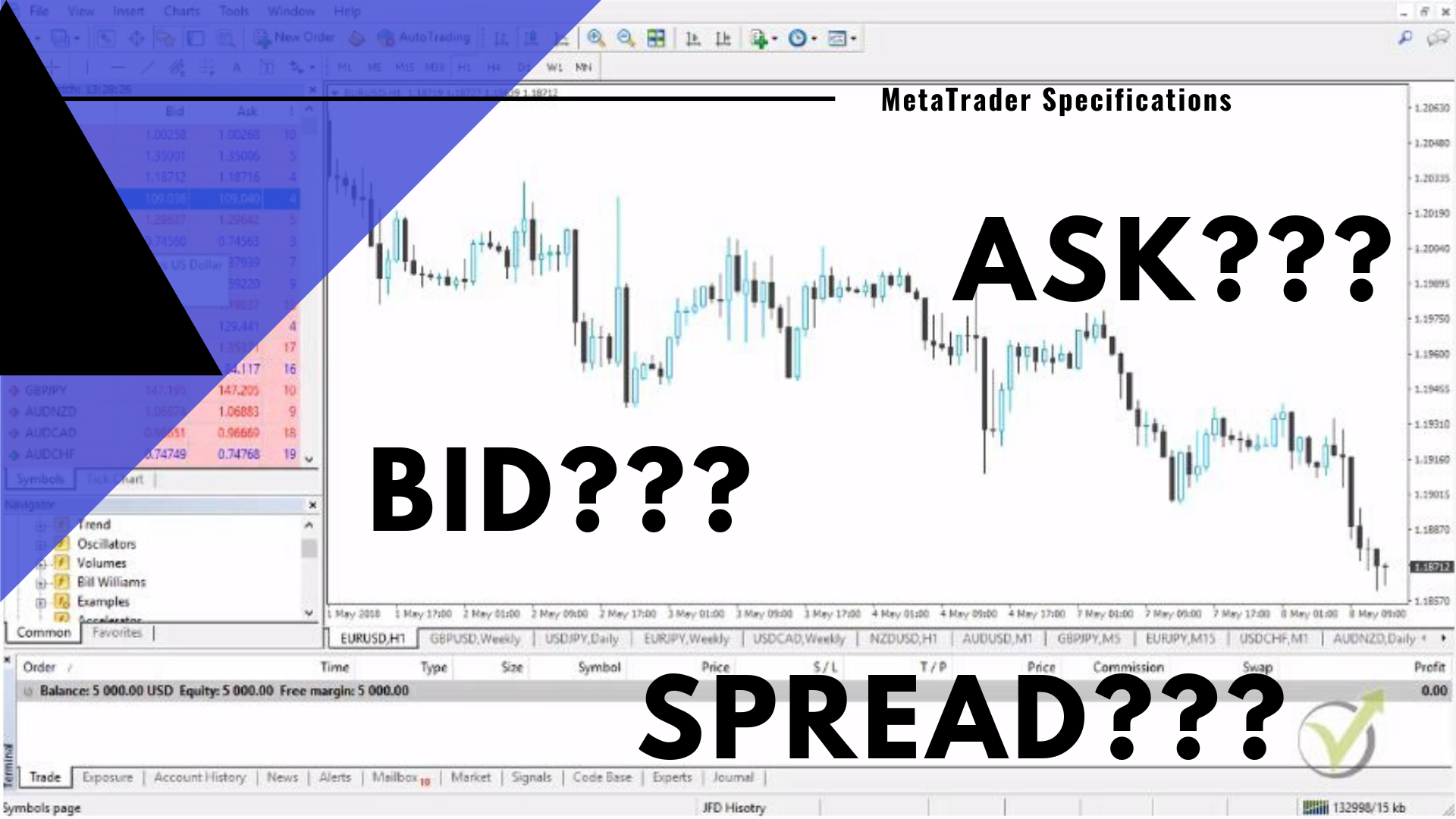
Every quote you see has two prices sitting side by side:
- Bid — the price you can sell at right now
- Ask — the price you can buy at right now
The gap between them is the spread, and it reflects the difference between available buy and sell prices at that moment. A broker may add a markup or charge a separate commission on top, depending on the account type and execution model, but the spread itself isn’t purely broker profit. Liquidity, volatility, and the pricing coming from underlying liquidity providers all play a role too.
EUR/USD is widely traded and often carries competitive spreads during liquid market hours, which is one reason it shows up so often in beginner material. That said, a tighter spread doesn’t automatically make it low-risk or suitable for every beginner. Volatility, news exposure, leverage, and how well you understand your own strategy matter just as much, maybe more.
A Buy Trade, Worked Through
Say EUR/USD is quoted at 1.10000 bid and 1.10012 ask.
A buy order opens at the ask, 1.10012. If the price later rises and you close when the bid reaches 1.10512, that’s a 50-pip gross move in your favor, before commission, slippage, or financing costs are factored in.
A Sell Trade, Worked Through

Now the opposite. A sell order opens at the bid, 1.10000. If the price falls and you close when the ask drops to 1.09500, that’s also a 50-pip gross move in your favor.
Both examples are simplified for teaching purposes. Neither includes leverage, position sizing, or account currency conversion, so treat them as illustrations of price movement, not as a template for calculating real trade outcomes.
How Profit and Loss Are Actually Calculated
The basic formula, for a simplified educational example, looks like this:
Price movement in pips × pip value × position size = approximate gross profit or loss
From there, your actual net result also depends on:
- Spread
- Commission
- Slippage
- Swap or overnight financing
- Currency conversion, if your account currency differs from the pair
- Taxes, where applicable
It’s worth remembering, too, that an individual retail order is normally too small to move a major currency pair like EUR/USD in any material way. Larger orders can run into slippage or execution issues depending on available liquidity, but that’s a different concern from market impact.
Spot Forex, Rolling Spot, and CFDs
This is one area where a lot of beginner content, including earlier guides on this exact topic, gets sloppy. Not every retail forex trade is automatically a CFD. The legal structure of what you’re actually trading depends on:
- Your jurisdiction
- The broker entity you’re registered with
- Your account type
- The product documentation for that specific instrument
- Whether it’s structured as rolling spot forex, a CFD, or something else entirely
Many retail brokers offer leveraged forex exposure through rolling spot contracts or CFDs, and which one applies depends on where you and the broker are based. Check your broker’s legal documents if you want to know exactly what you’re trading, since this genuinely does vary.
Broadly speaking, a CFD:
- Tracks the price movement of an underlying market
- Doesn’t normally give you ownership of the underlying currency
- Produces profit or loss from the difference between your opening and closing prices
- Can involve leverage
- May include spread, commission, financing, and slippage as separate cost components
- Is regulated differently depending on jurisdiction
To put the size of this market in perspective, the Bank for International Settlements’ 2025 Triennial Central Bank Survey put average daily turnover in OTC foreign exchange markets at roughly $9.6 trillion, up from $7.5 trillion in the 2022 survey. That’s the entire global FX market across banks, funds, and other institutions, not retail trading alone, and it gives you a sense of just how much liquidity typically sits behind a pair like EUR/USD during normal trading hours.
How Leverage Affects Buy and Sell Trades
Leverage lets you control a larger position than your account balance alone would allow. It amplifies both gains and losses equally, which is easy to say and much harder to internalize when you’re actually watching a position move against you.
Higher leverage means:
- A smaller price move can produce a larger percentage change in your account
- Margin requirements become tighter relative to your position size
- Risk of a margin call increases if the market moves against you quickly
Leverage limits, margin rules, and disclosure requirements vary by regulator, so check what applies in your jurisdiction and with your specific broker before assuming a particular ratio is available or appropriate for your situation.
What Determines When to Buy or Sell?
Here’s something worth being direct about: there’s no universal signal that tells you when to enter a trade. Market mechanics (what buying and selling mean) and strategy selection (when to actually do it) are genuinely different questions, and mixing them together is part of what made earlier versions of content like this confusing.
A complete trading method generally needs to define each of these:
| Component | Question it answers |
| Market | Which currency pair are you trading? |
| Timeframe | Which chart controls the decision? |
| Setup | Trend, range, breakout, or reversal? |
| Entry | What exact condition opens the trade? |
| Invalidation | What proves the idea wrong? |
| Exit | Target, trailing stop, signal, or time limit? |
| Position size | How much capital is at risk per trade? |
| Event filter | Are major news announcements avoided? |
| Daily limit | When does trading stop for the day? |
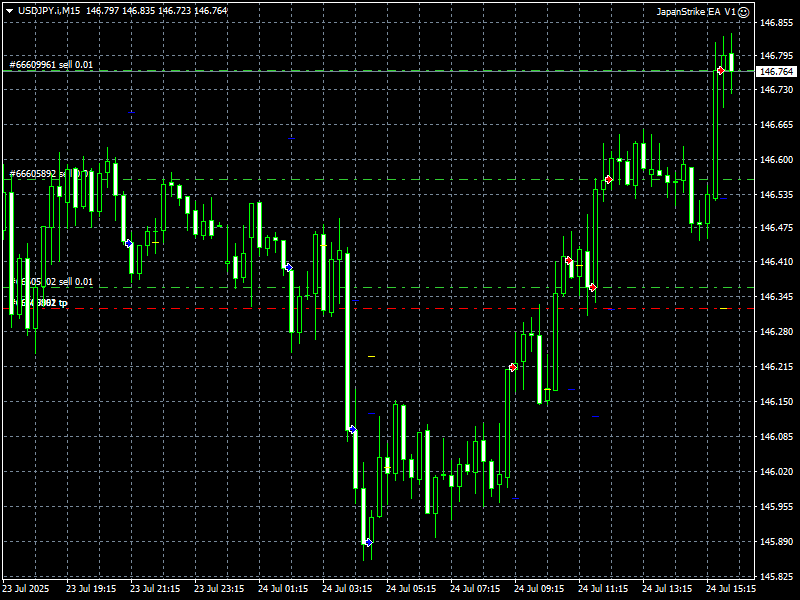
As an example of how this looks in practice, some traders build entries around a volatility band, like an Envelope indicator, paired with a fixed stop and target on a lower timeframe such as M15. I won’t walk through the full rule set here, since a strategy like that deserves its own dedicated article with a complete, reproducible test report rather than a quick mention buried in a mechanics guide. If you’re curious, that’s coming as a separate piece, and it’ll include the actual test period, data source, costs, and drawdown figures rather than a single equity curve screenshot.
One thing I’d flag regardless of which strategy you eventually land on: once your test results start influencing how you tweak the rules, that data stops being genuinely out of sample. It’s tempting to keep adjusting a strategy until the backtest looks smooth, but that’s usually a sign you’re fitting the rules to the past rather than building something that holds up going forward.
Common Beginner Mistakes
- Treating a strategy as proven because it produced a lot of trades. Trade count alone doesn’t establish robustness; a strategy can generate hundreds of overfit trades just as easily as a sound one.
- Judging a system from a single smooth-looking balance chart without checking drawdown, out-of-sample results, or cost sensitivity.
- Assuming default indicator settings are rigged against you. Default parameters are general starting values, not proven settings for every market or timeframe, and there’s no credible basis for the idea that brokers set them to make traders lose.
- Manually closing trades early “because it’s close to target,” then treating the backtest as if that discretionary habit was part of the tested rules. If early exits are part of your approach, define and test them explicitly.
- Confusing “when to buy and sell” content, which is strategy, with basic trade mechanics, which is what this article covers.
Demo Accounts and Risk
Rushing into live trading before you understand how buy and sell orders actually behave is one of the more common ways beginners lose money quickly. A demo account lets you practice the mechanics, order types, and platform behavior without risking real capital, and it’s worth spending real time there before switching to live.
A few risk basics worth repeating, even though they’re not new:
- Never risk money you can’t afford to lose.
- Leverage can just as easily work against you as for you.
- Fast profits are not typical, and content that promises them deserves skepticism.
- Treat unsolicited account-management offers, guaranteed-return claims, or requests to hand over remote access to your trading account as major warning signs. Legitimate regulated investment managers do exist, but you should verify any provider through the relevant regulator’s official register before sharing funds or account access with anyone.
Frequently Asked Questions
What’s the difference between buying and selling in forex?
Buying a currency pair means purchasing the base currency while selling the quote currency, and it profits when the pair’s price rises. Selling does the opposite: you’re selling the base currency and buying the quote currency, profiting when price falls. For EUR/USD, a buy benefits from euro strength against the dollar, while a sell benefits from euro weakness. Both directions use the same underlying mechanics, just mirrored.
Do I need to already own a currency to sell it in forex trading?
No. Retail forex and CFD-style products don’t require you to hold the base currency before opening a sell position. The trade reflects the price difference between your entry and exit, settled in your account currency, rather than an actual currency exchange or delivery. This is specific to how these instruments are structured and regulated, so always confirm the exact product type with your broker’s documentation.
Is forex trading the same as CFD trading?
Not always. Depending on your jurisdiction, broker entity, and account type, you might be trading rolling spot forex, a CFD, or another structured product. Each carries different regulatory treatment, margin rules, and documentation. The mechanics of buying and selling often look similar on the platform itself, but the underlying legal structure can differ, so check your broker’s product disclosure rather than assuming.
How is profit or loss calculated on a forex trade?
At a basic level, profit or loss equals the price movement in pips multiplied by pip value and position size. That gives you a gross figure. Your actual net result also factors in spread, commission, slippage, overnight swap charges, and currency conversion if your account currency differs from the pair traded. Leverage doesn’t change the pip math, but it does change how much capital you needed to open the position.
How big is the forex market compared to other financial markets?
According to the Bank for International Settlements’ 2025 Triennial Central Bank Survey, average daily turnover in global OTC foreign exchange markets reached approximately $9.6 trillion in April 2025, making it the largest financial market in the world by trading volume. That figure covers the entire institutional and interbank market, not retail trading specifically, and it’s updated roughly every three years through the BIS survey.
Final Summary
Buying and selling in forex both come down to the same basic idea: you’re taking a position on how one currency will move against another, opening at one price and closing at another. The direction changes, long versus short, but the mechanics underneath stay consistent. Everything past that, position sizing, leverage, entry strategy, is a separate layer built on top of these basics, and it’s worth understanding the foundation properly before adding complexity on top of it.
This article is for educational purposes and does not constitute financial or investment advice. Trading forex and CFDs carries a high level of risk due to leverage and may not be suitable for all investors. You could lose more than your initial deposit. Verify product structure, leverage limits, and regulatory status with your own broker before trading.