


Risk warning. Forex trading with leverage carries substantial risk to your capital. Most retail accounts trading these products lose money. Nothing below is personalized advice, and no amount of preparation removes the possibility of losing what you deposit.
The Direct Answer
Forex day trading means opening and closing currency pair positions inside a single trading day, with nothing deliberately held overnight. That’s the whole definition.
Before placing anything, a beginner needs to understand how currency quotes work, what a pip is, what a lot is, how spreads and commissions take their cut, how leverage magnifies both directions, and where a protective exit belongs. Skipping that groundwork is how most people lose their first deposit.
A workable starting path looks like this: learn one setup thoroughly, test it against historical charts, trade it on a demo account until you have real evidence, record every result honestly, and cap your daily loss before you begin rather than after a bad session.
This forex trading guide covers each of those stages. The autobiography, mentor discussion, and course promotion that filled most of the 2020 version have been cut back sharply, because a beginner searching for forex day trading help needs the mechanics first.
What Actually Happens in a Forex Day Trade
Forex trading works in currency pairs. EURUSD, USDJPY, GBPUSD: the first currency is the base, the second is the quote, and the price shows how much of the quote currency one unit of the base costs.
Buying EURUSD means taking a long position on the euro against the dollar. Selling it means the reverse. There’s no borrowing involved, which is where the old article’s short-selling explanation went astray by describing stock market mechanics that don’t apply to forex trading.
A complete forex day trading cycle looks like this:
- Your setup produces a signal on the chart you’re watching.
- You place an order through your trading platform, either at market or at a specified level.
- A protective exit goes on immediately, defining the worst outcome.
- A target goes on, or you manage the exit by some other defined method.
- Price does something, and the trade closes.
- You record what happened, including your own behaviour.
- Everything shuts before the trading day ends.
Step seven is what separates day trading from swing approaches. Closing before the trading session ends removes exposure to overnight gaps, which is genuinely useful. It does not make forex day trading safer overall, and the earlier version of this page implied otherwise.
Why not? Because active day trading introduces its own risks: higher trade frequency means more spread paid, so trading costs mount, leverage tends to be used harder on short horizons, news releases hit during active hours, and the temptation to overtrade is constant. Removing one risk while adding several others is not a reduction.
Why People Choose Forex Day Trading Over Other Markets
Worth understanding what draws beginners here rather than to shares or futures.
Currency markets run around the clock across five weekdays, which means somebody with a job can still find active hours. Entry costs are low compared with most investment routes, since brokers accept small deposits and micro lots let you size trades sensibly on modest balances. And unlike a stock exchange with thousands of listings to research, most forex trading happens across a handful of major currency pairs, so beginners choose from a much smaller universe.
Those advantages come attached to a warning. Accessibility is not the same as ease, and the low barrier to entry is precisely why so many undercapitalised traders arrive without trading strategies or any risk framework. An investment in shares held for years behaves nothing like a leveraged forex trade held for twenty minutes, and treating the second as a faster version of the first is a common and expensive misunderstanding.
Something else to weigh: forex markets offer no equivalent of dividends or long-term compounding. Every dollar you make in forex comes from price movement captured through active trading, which means your trading results depend entirely on your process rather than on time in the market. That cuts both ways, and it explains why the discipline sections above matter more than the strategy section.
The Vocabulary You Need First
| Term | What it means in forex trading |
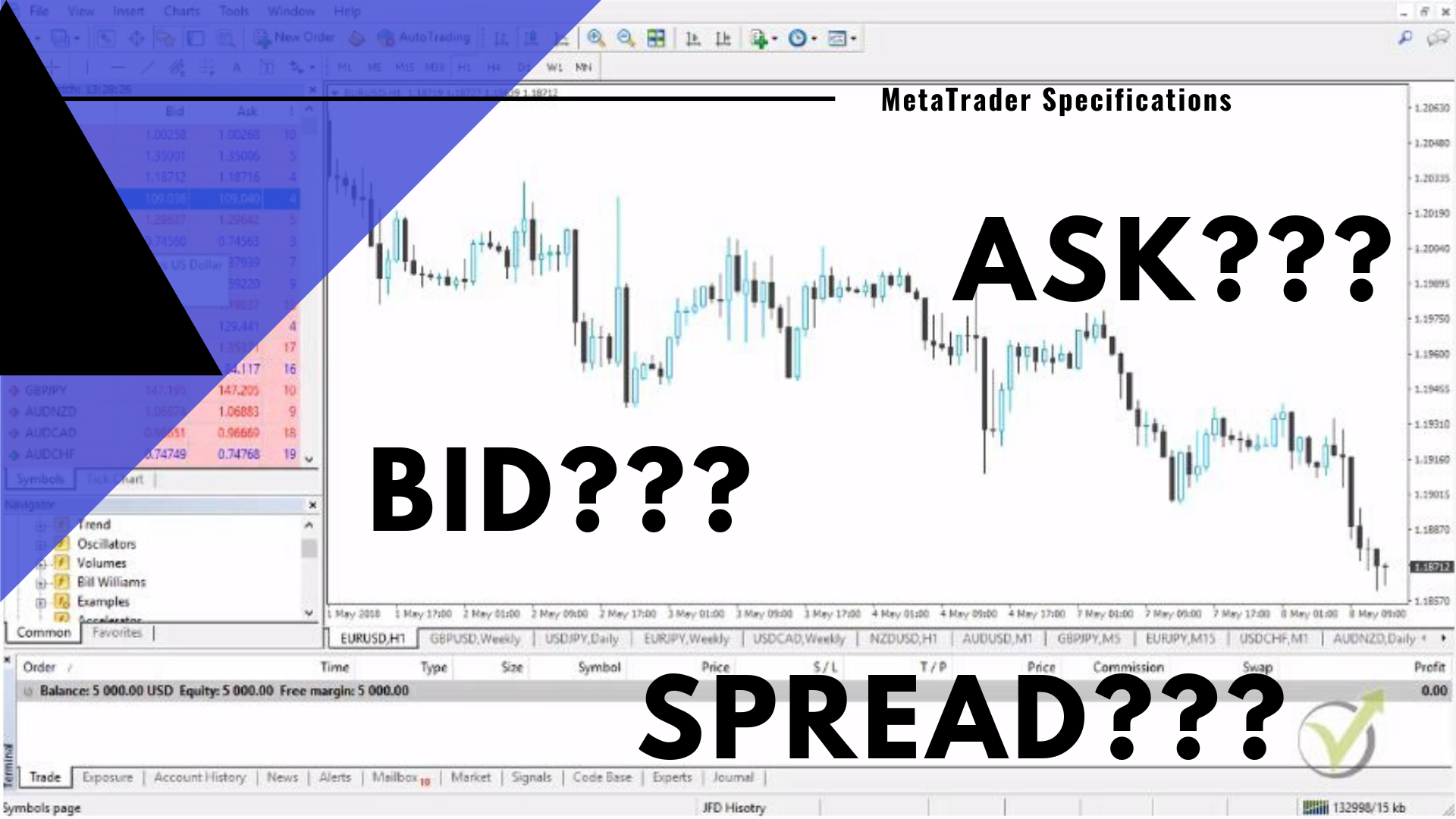
| Bid | The price at which you can sell the base currency |
| Ask | The price at which you can buy it |
| Spread | Ask minus bid, your cost of entry |
| Pip | The standard increment, usually the fourth decimal, or the second on yen pairs |
| Lot | Standard position size; a standard lot is 100,000 units, a mini is 10,000, a micro is 1,000 |
| Leverage | Borrowed exposure allowing larger positions than your balance |
| Margin | The portion of your balance held against an open position |
| Liquidity | How easily a pair trades without moving the price, visible in tighter spreads |
| Swap | Overnight financing, largely irrelevant if you close daily |
| Slippage | The gap between your expected fill and the actual one |
Two of those definitions were wrong in the 2020 version and deserve flagging. Liquidity is not how quickly something converts to cash; in forex markets it describes depth and the ease of trading without moving price. And bid and ask are not interchangeable roles a single trader occupies, they’re simply the two sides of every quote you see.
Major, Minor, and Exotic Pairs
Beginner forex traders should stay in the first category, and here is why trading strategies built on majors travel better.
| Category | Examples | Characteristics |
| Majors | EURUSD, USDJPY, GBPUSD, USDCHF | Tightest spreads, deepest liquidity, most predictable behaviour |
| Minors | EURGBP, AUDNZD, EURJPY | Wider spreads, decent activity, no dollar leg |
| Exotics | USDTRY, USDZAR, EURHUF | Very wide spreads, erratic gaps, unsuitable for beginners |
Trading costs alone justify that recommendation. One pair with a three-pip spread costs you three times what a one-pip major does on every single entry, and for forex day trading, where trades might last twenty minutes, that difference dominates results.
Sessions and When to Trade
Forex markets run continuously from Sunday evening to Friday evening, but activity is far from uniform.
| Session | Rough hours (UTC) | Character |
| Sydney and Tokyo | 22:00 to 08:00 | Quieter, yen pairs most active |
| London | 07:00 to 16:00 | Highest volume, tightest spreads |
| London and New York overlap | 12:00 to 16:00 | Most movement of the trading day |
| New York | 12:00 to 21:00 | Dollar pairs active, thinning later |
Most forex day trading opportunities cluster in the London trading session and the overlap. Outside those hours, spreads widen and moves tend to stall, which means you pay more to capture less.
Pick your trading hours and stay in them. Trading whenever you happen to be free produces inconsistent conditions and inconsistent trading results, and you’ll never work out which was responsible.
Order Types
Four you need, and the limit order explanation in the old article was too vague to be useful.
- Market order: Buy or sell immediately at whatever price is available. Fast, with slippage risk.
- Limit order: Instructs the platform to transact at a specified price or better. It may never fill, which is the trade-off for price control.
- Stop loss: Closes automatically at a defined level, capping the loss. Not guaranteed during gaps or extreme volatility.
- Take profit: Closes automatically at your target.
Every forex day trading trade should carry a protective exit from the moment it opens. No exceptions, and particularly not the “I’ll watch it” exception, which fails the first time your connection drops or your attention wanders.
Leverage, Honestly
Leverage lets a small balance control a large position. A ratio of 30:1 means $1,000 controls $30,000 of currency exposure.
Here’s the part beginners underestimate: leverage magnifies losses exactly as much as gains, and heavy leverage means small adverse moves produce large account damage. Regulators across the UK, EU, and Australia have capped retail forex trading leverage precisely because of the losses it produced, which tells you something about how it typically gets used.
Practical guidance: your forex position size should come from your risk calculation, not from how much leverage your broker permits. Available leverage is a ceiling, not a target.
Position Sizing, With a Worked Example
This is the most important calculation in day trading, and the original article skipped it entirely while discussing leverage at length.
| Input | Example |
| Account balance | $5,000 |
| Risk per trade | 1% |
| Maximum loss | $50 |
| Protective exit distance | 25 pips |
| Allowed value per pip | $2.00 |
| Position size | Derived from your broker’s contract specification |
Divide the money you’re prepared to lose by the distance to your protective exit, and you get the value per pip you can afford. Convert that into lots using your pair’s specification, remembering that the calculation differs for yen crosses and for accounts denominated in currencies other than the dollar.
Wider protective distances mean smaller positions. Not bigger risk. Many beginners hold size constant and let risk float with whatever the chart offers, which is precisely backwards.
A Risk Framework Before Any Strategy
Risk management deserves more prominence than setup selection, and I’d argue it deserves more attention than everything else on this page combined.
| Limit | Suggested starting point |
| Risk per position | 1% of balance or less |
| Maximum simultaneous exposure | 2% across all open positions |
| Daily loss ceiling | 3%, then stop for the day |
| Maximum trades per trading day | 3 to 5 |
| Correlated pairs | Avoid holding EURUSD and GBPUSD long trades together |
| Major news releases | Flat, or reduced size |
| Overnight holding | Prohibited by definition |
| Weekly loss ceiling | 6%, then review before continuing |
The daily ceiling matters most. Losing trading sessions happen to everyone, and the difference between a manageable one and an account-ending one is usually whether somebody kept trading after the third loss trying to recover.
Write these limits down before your first trade. Deciding them mid-session, while losing, produces numbers shaped by hope rather than arithmetic.
One Complete Beginner Strategy
Naming forex trading strategies without explaining any of them is unhelpful, so here is a full example. Treat it as a teaching structure rather than a trading recommendation, and test it yourself before trusting it.
| Component | Specification |
| Market | EURUSD only |
| Chart period | M15 |
| Session filter | London open through the New York overlap |
| Direction filter | Price above the 50-period moving average for longs, below for shorts |
| Entry signal | Pullback to the moving average, then a candle closing back in the trend direction |
| Order timing | Market order at the open of the following candle |
| Protective exit | Beyond the pullback extreme, minimum 15 pips |
| Target | Twice the protective distance |
| Spread filter | Skip entries when the spread exceeds 2 pips |
| News filter | No entries within 30 minutes of high-impact releases |
| Daily limit | Maximum 3 trades |
| Session close | Everything flat before the New York afternoon |
Notice how much specification a single trading strategy requires. Every ambiguity you leave becomes a decision you make under pressure, and decisions made under pressure are where discipline fails.
Building Your Trading Plan
A trading plan is simply your answers written down before the day begins.
- Which pairs: One or two, both majors.
- Which hours: Specific, and consistently observed.
- Which setup: One, described precisely enough that another trader could follow it.
- Risk limits: The table above, or your own trading version of it.
- Review schedule: Weekly, looking at process rather than profit.
- Stop conditions: What makes you halt entirely and reassess.
Keep it to one page. A trading plan you don’t read is decoration.
Testing Before Money
Three stages, in sequence, and most people skip straight to the third.
- Historical review: Scroll back through charts and mark where your trading setup would have triggered. Slow and tedious, and it teaches you more about your own approach than any course does. Aim for at least a hundred examples across different forex market conditions.
- Demo trading: Run the same forex strategy in real time with virtual funds. Signals arrive at awkward moments, spreads widen unexpectedly, and you find out whether you can actually follow your own plan. Give this months, not weeks.
- Small live trades: Only after demo trading results hold up. Start with sizing so small that the money is genuinely irrelevant, because the psychological difference between virtual and real capital is larger than anyone expects.
I’ve watched plenty of people produce excellent demo results and fall apart within a fortnight of going live. Nothing about the market changed. They did.
Keep a Trading Journal
Record every trade: the pair, direction, entry, exit, size, result, and crucially whether you followed your plan.
That final column is the valuable one. A losing trade taken correctly is a good outcome. A winning trade taken by breaking your own rules is a problem, because it teaches you that discipline is optional.
Review your trading journal weekly. Look for patterns in when you deviate, which hours produce your worst results, and whether your trading costs are consuming more than you realized.
Common Beginner Mistakes
- Overtrading: Taking trades because you’re bored rather than because your setup appeared. Costs accumulate quietly.
- Revenge trading: Increasing size after a loss to recover it faster. This is how accounts end.
- Moving the protective exit: Widening it as price approaches converts a planned small loss into an unplanned large one.
- Trading through news: Spreads triple, fills land far from expectation, protective levels get jumped.
- Too many pairs: Watching eight forex markets means understanding none of them.
- Changing trading strategies weekly: Nothing gets tested long enough to know whether it works.
- Ignoring costs: Spread plus commission on five trades daily adds up to a substantial annual figure.
- Excessive leverage: Covered above, and worth repeating for any new trader because it’s the fastest route to a closed account.
Choosing a Forex Broker
| Check | What to verify |
| Regulation | Named regulator, licence number, and which entity holds your funds |
| Costs | Spread, commission, swap, inactivity fees |
| Execution | Order type support and published slippage policy |
| Platform | Whether it suits your workflow |
| Demo access | Available without time limits, ideally |
| Withdrawals | Methods, fees, and processing times |
| Automation | Whether Expert Advisors are permitted |
Regulation matters more than any forex broker promotion. Check the regulator’s own register rather than the claim on the website, since unlicensed firms sometimes display badges they have no right to.
About that 99% figure the old version quoted: it claimed nearly every beginner blows their account within a month, attributed to experience across six firms. No dataset supported it, so it’s gone. What can be said accurately is that regulated brokers publish their own loss percentages, those figures typically sit somewhere between 65 and 80 percent of retail accounts, and beginning day trading without tested strategies or defined risk limits makes you considerably more likely to join them.
Manual Trading or Automation?
Automation belongs after the forex trading fundamentals, not instead of them.
An Expert Advisor executes predefined logic without hesitation, which removes emotional interference at the moment it does most damage. It cannot assess whether its own logic still suits current forex market conditions, and it will keep placing orders while losing money if that’s what its instructions say.
Some trading systems I’ve built for USDJPY illustrate what automation can handle: several systems running on M5 and M15 charts while referencing conditions on M30 and H1, with optional position-adding on repeat signals and automatic reversal when an opposite signal appears. Useful behaviour, though it also means somebody needed to define what “repeat signal” and “reversal” mean precisely before any of it worked.
Practical sequence: understand the forex market, define one trading approach manually, test it, trade it yourself for a few months, and only then consider automating what you already understand. Beginner traders who start with a purchased system typically cannot tell whether poor results reflect a broken approach or unsuitable conditions, and that distinction determines what you do next.
Disclosure: I sell courses covering strategy development and automated systems. Weigh the recommendation above accordingly.
Frequently Asked Questions
How much capital do I need to start?
Enough that minimum position sizes represent a small fraction of the balance, which in practice means several hundred dollars at minimum for micro lots and considerably more for comfort. Accounts under a few hundred force position sizes that risk large percentages on ordinary moves, making disciplined risk management impossible. Start with money you can afford to lose entirely, and treat the first year as tuition rather than income. Anyone promising meaningful returns from a tiny deposit is selling something.
Can I day trade forex part-time?
Yes, provided your available hours overlap with active trading sessions for the pairs you follow. The London open and the New York overlap offer the best conditions, so someone in Europe trading before work or someone in America trading mornings both have workable windows. What doesn’t work is trading whenever you happen to be free, since thin sessions produce wider spreads and choppier movement. Consistency of hours matters more than quantity.
Is forex day trading taxed?
Treatment varies enormously by country and sometimes by the product you use. Some jurisdictions treat profits as capital gains, others as income, and a few have specific regimes for spread betting or CFD instruments. Record-keeping obligations differ too. Consult your national tax authority or a qualified professional before your first tax year ends, since reconstructing a year of positions retrospectively is unpleasant and mistakes can be expensive.
What’s the difference between day trading and scalping?
Scalping targets very small moves with holding times measured in seconds or minutes, often producing dozens of trades daily. Forex day trading covers anything closed before the session ends, which might mean three positions held for an hour each. Scalping demands faster execution, tighter spreads, and considerably more screen time, and transaction costs consume a much larger share of each move. Most beginners find the slower approach more manageable.
Should I use a demo account forever?
No, because demo trading cannot replicate the psychological pressure of real money, and past a certain point it stops teaching you anything new. Once you’ve followed your trading plan consistently across several months and a meaningful number of positions, the remaining lessons only arrive with capital at stake. Move across at minimal size. Returning to demo temporarily after changing your approach is sensible; treating it as a permanent home is avoidance.
Do trading robots make this easier?
They remove execution decisions, not strategy risk for the trader. Somebody still has to define profitable logic, test it properly, size positions sensibly, and monitor whether conditions have changed. Automation also introduces failures manual forex trading doesn’t have: connection drops, coding errors, platform updates, and unattended positions. Easier in one dimension, harder in others. Anyone selling automation as a route to passive income is describing something that doesn’t exist.
What happens if I hold a position overnight by accident?
Swap charges apply, calculated on your position size and the interest differential between the two currencies, and they can be positive or negative. More significantly, you carry gap risk into the next session, where price can open well away from Friday’s close following weekend news. Set a platform alert before your intended close time. Some day traders configure automatic closure at a fixed hour, which removes the possibility entirely.
Which currency pair should a beginner start with?
EURUSD, almost always. That pair carries the tightest forex spreads available, enormous liquidity across every session, and behaviour that’s been studied more thoroughly than any other instrument. Learning one pair deeply beats spreading attention across several, since you develop a feel for its typical daily range and how it responds to scheduled releases. Add a second only once the first has become genuinely familiar, which usually takes longer than expected.
Disclosure: This page is educational and does not constitute personalized advice or a recommendation to trade. The author sells trading education, and broker links elsewhere on this site may carry commercial arrangements. Consider your circumstances and, where appropriate, seek guidance from a regulated professional before risking capital.

Comments
No comments yet. Be the first to comment!
Leave a Comment
Your email address will not be published. Required fields are marked with *